
The Department of Homeland Security will now require states to conduct random, hand-counted audits of paper ballots if they want full access to federal election security grants, a policy shift Secretary Markwayne Mullin says is necessary because of Chinese-manufactured components found inside America’s voting machines.
The New Requirement
Under the policy, outlined in an August 24 letter Mullin sent to the White House Transparency Task Force, states seeking the full Homeland Security Grant Program award must demonstrate they conducted random post-election manual counts of paper ballots — reconciling roughly 5% of ballots cast against machine-generated tallies. States must also submit plans for phasing out tabulation systems that rely on barcodes or QR codes, and use the department’s SAVE system to help verify voter citizenship. Mullin’s letter warned that voting equipment containing components manufactured by “foreign adversaries” creates “significant security risks” that could be introduced anywhere along the supply chain, long before a machine ever reaches a local election office.
Three Companies, One Supply Chain Problem
The concern centers on the voting technology industry’s heavy reliance on a small number of vendors. Election Systems & Software, Hart InterCivic and Dominion Voting Systems together account for more than 80% of the U.S. voting machine market, and all three have previously acknowledged, including in a 2020 congressional hearing, that some components in their machines are sourced from Chinese manufacturers. Mullin’s letter acknowledges the underlying problem is not easily solved: some parts, he wrote, simply “cannot be sourced from domestic manufacturers,” leaving vendors dependent on foreign suppliers regardless of security concerns. The concern is not entirely new: a 2020 House Homeland Security Committee hearing first surfaced questions about Chinese-made circuit boards and touchscreen components appearing in certified voting systems, prompting some vendors to pledge supply-chain reviews that election security researchers say were never independently verified. This year’s letter effectively revives that unresolved debate and, for the first time, attaches real financial consequences in the form of grant eligibility.
Context: A Long Fight Over Paper Trails
Election security researchers have pushed for robust paper-ballot audits for more than a decade, arguing that a physical, voter-verified record is the single most reliable defense against both hacking and unfounded claims of a rigged count. Roughly 99% of voters nationwide are expected to cast ballots with a paper trail in 2026, and CISA’s own newly released election infrastructure plan, published September 24, likewise elevates audits as its central technical recommendation. In that sense, DHS’s grant conditions echo years of nonpartisan guidance from groups like the Brennan Center and Verified Voting.
Where the Skepticism Comes In
Even so, intelligence officials briefed on the matter have been careful to note there is currently no evidence that Chinese-sourced components have been used to manipulate an actual U.S. vote count. That gap — real supply-chain exposure but no documented exploitation — has fueled a debate over whether the mandate meaningfully improves security or mostly functions as a politically charged talking point ahead of a midterm election already dominated by disputes over voting machines and foreign influence. Some election administrators, who have spent years building audit procedures independent of federal pressure, privately describe the new grant condition as an unfunded mandate that arrives with little lead time and no additional money attached, even as many states already conduct audits that meet or exceed the new federal floor.
What’s Next
States now have weeks, not months, to certify their audit plans before the grant cycle deadlines and before ballots start going out for November’s midterms. How aggressively DHS enforces the new condition — and whether it becomes a template for future election security funding — will likely shape how the federal government approaches voting equipment oversight well beyond this cycle. Watch for state election directors’ associations to weigh in publicly in the coming weeks, and for Dominion, ES&S and Hart InterCivic to face renewed pressure to detail their supply chains. Congressional appropriators are also expected to weigh in, since the grant conditions effectively let DHS set election administration policy through funding strings rather than legislation — an approach that could face legal challenges from states that view it as federal overreach into an area the Constitution generally reserves to the states. For voters, the practical upshot is straightforward regardless of the political noise: more ballots than ever will be checked by hand against machine counts this November, giving the public a physical paper record to point to if results are ever disputed in a closely fought Senate or House race.
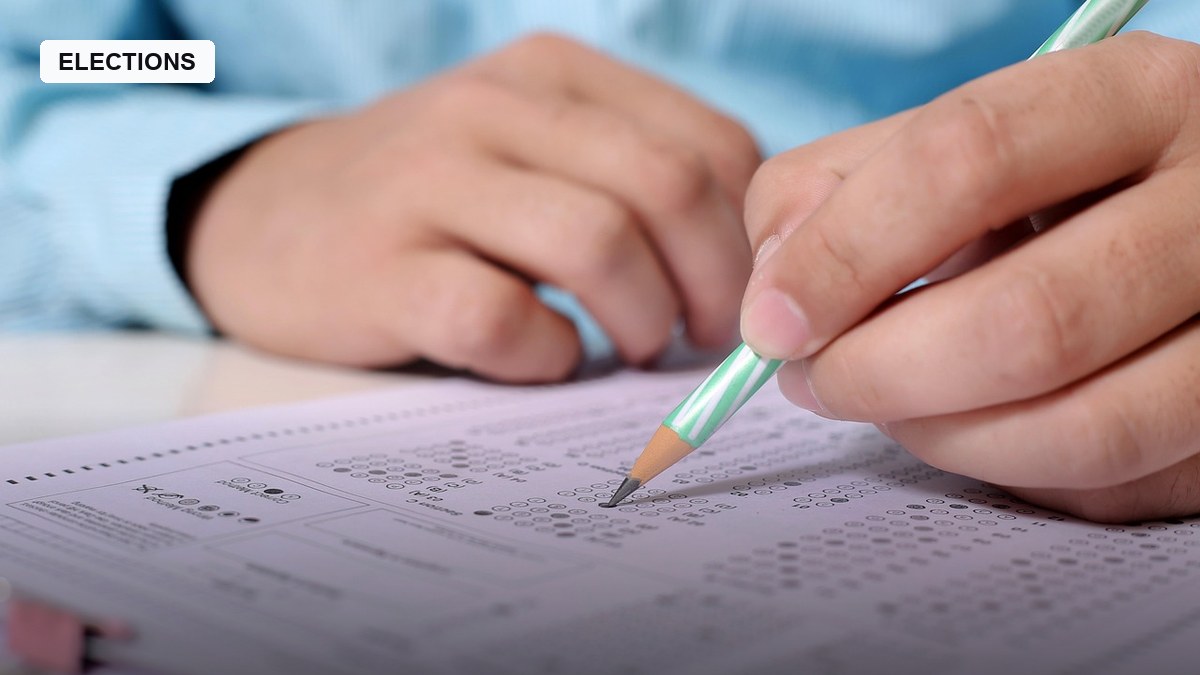
Photo: F1Digitals / PIXABAY via Pixabay

