
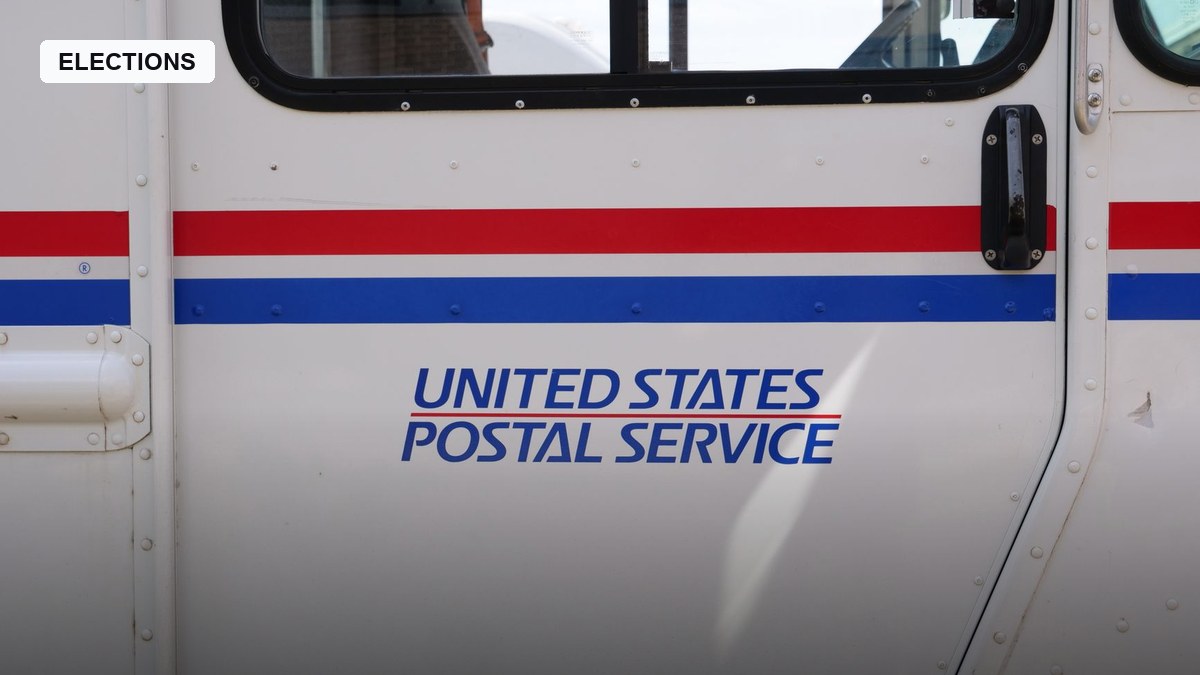
The Supreme Court on September 14, 2026 declined to let a Trump administration plan to screen mail-in ballots through the U.S. Postal Service take effect before the November midterms, rejecting an emergency request from the Justice Department. In an unsigned order, the Court found the government \”unlikely to succeed on the merits\” of its case and warned that implementing the plan now would create confusion for voters and election officials just weeks before Election Day.
An Executive Order Aimed at Mail Ballots
The dispute traces back to an elections-related executive order President Trump signed in March 2026, which directed federal agencies to compile lists of verified eligible voters in each state and instructed the Postal Service to limit certain ballot-handling procedures to voters on those lists. Election law experts said the plan would have effectively given USPS — an agency with no statutory role in determining voter eligibility — a gatekeeping function over which ballots received priority handling and delivery tracking, raising practical concerns for states that mail ballots to every registered voter. Nine states, including Colorado, Oregon, Washington, Utah and Vermont, conduct their elections almost entirely by mail, and election officials in those states said the order’s verification requirements would have forced last-minute changes to systems that have processed ballots the same way for years without major incident.
Two Injunctions in Ten Days
Voting rights groups and Democratic state election officials sued to block the plan over the summer, and two federal judges ruled against the administration within days of each other. On September 4, U.S. District Judge Indira Talwani issued a preliminary injunction, finding USPS had no legal authority to condition mail-ballot handling in the way the order required. Judge Carl J. Nichols issued a second injunction on September 13 in a separate challenge. The Justice Department asked the Supreme Court to lift both injunctions on an emergency basis so the rule could apply to the 2026 midterms; the Court instead left the lower-court rulings in place. Both injunctions relied in part on the Postal Reorganization Act of 1970, which gives USPS operational independence from direct White House control over day-to-day mail handling, a structure Congress built specifically to insulate postal operations from political interference.
Kavanaugh’s ‘Arbitrary and Capricious’ Concurrence
Justice Brett Kavanaugh wrote separately to explain his vote, arguing that even if the underlying policy might be permissible in principle, imposing it now — with election officials having had no meaningful time to adjust their procedures — would be \”arbitrary and capricious\” under the Administrative Procedure Act, the federal law governing how agencies must justify and implement new rules. Justices Samuel Alito and Clarence Thomas dissented, reflecting the administration’s view that the executive branch has broad authority over federal agencies like the Postal Service and that the lower courts had overstepped by second-guessing an election-integrity measure. Neither dissenting justice wrote a lengthy opinion of his own, a common feature of the Court’s emergency, or shadow, docket, where rulings often come without full briefing or oral argument and with only brief accompanying statements.
Election Officials Welcome a Return to the Status Quo
Secretaries of state from both parties who run mail-ballot programs said they could not have reprogrammed sorting and verification systems in time for the 2026 cycle regardless of the rule’s merits, a practical concern that featured prominently in both lower-court rulings. Voting rights advocates framed the decision as a defense of USPS’s traditional, nonpartisan role in simply delivering ballots rather than screening them. Administration officials and some Republican lawmakers countered that the ruling was about timing, not substance, and said they still believe additional safeguards on mail balloting are warranted; they have signaled they may pursue similar changes through a full notice-and-comment rulemaking process after the midterms, a slower path but one more likely to survive a future APA challenge. The National Association of Secretaries of State, a bipartisan group, had separately urged the justices to leave existing mail-ballot procedures untouched for 2026, arguing that public confidence in the postal system is part of what keeps mail-voting participation high in the states that rely on it most.
What’s Next
For now, states will administer mail balloting under their existing rules for the November 3 general election, including the special Senate contests and House races on the ballot this cycle. But the underlying legal question — how much authority the executive branch has over Postal Service handling of election mail — remains unresolved, and both sides expect it to resurface well before the 2028 presidential election. Election administrators say the bigger lesson of the episode may be procedural: major changes to how ballots are handled need to be proposed and litigated years, not months, ahead of an election if they are going to survive judicial review.
Photo: Giant Asparagus / PEXELS via Pexels

