
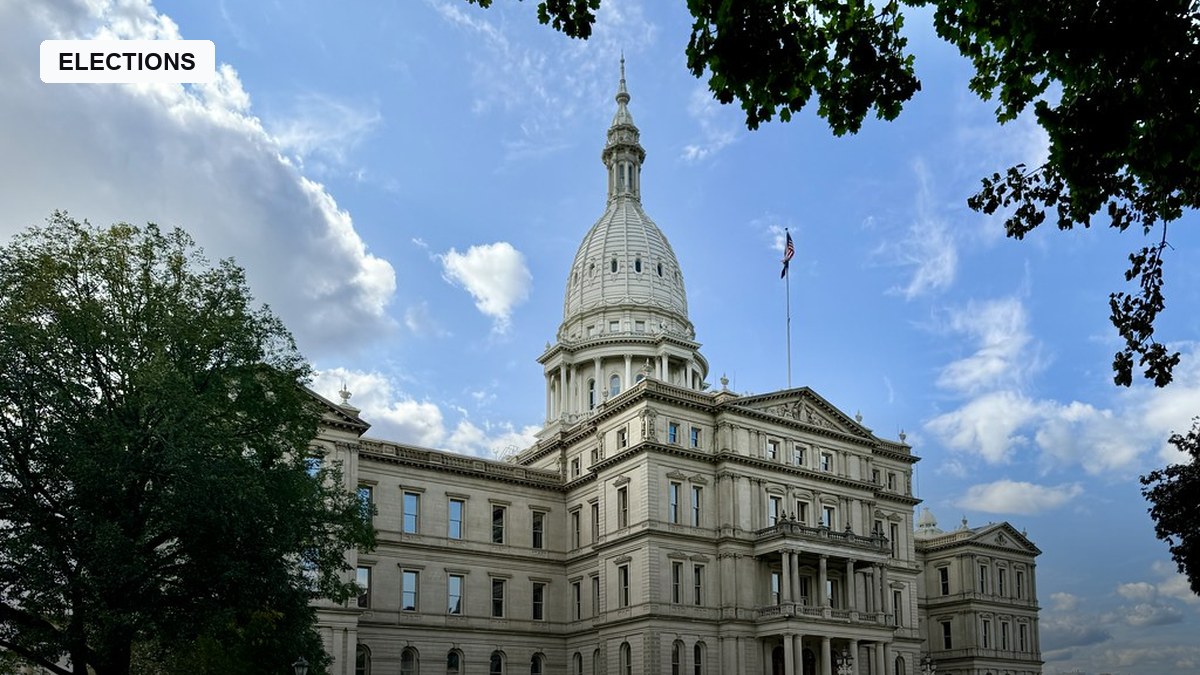
With Michigan’s incumbent Secretary of State Jocelyn Benson term-limited and running for governor instead, the race to become the state’s next chief election official has turned into a general-election contest between Lieutenant Governor Garlin Gilchrist, the Democratic nominee, and Macomb County Clerk Anthony Forlini, the Republican nominee. The office administers Michigan’s elections, oversees voter rolls, and will certify the state’s results in the 2028 presidential election, giving the race outsized stakes beyond its usual down-ballot profile.
An Office Opened by Term Limits
Benson, a Democrat who built a national profile defending Michigan’s 2020 election results against unfounded fraud claims, is barred by term limits from seeking a third term as Secretary of State and is instead running for governor in 2026. Rather than going through traditional primaries, both major parties selected their Secretary of State nominees at state party conventions in August 2026 — Democrats choosing Gilchrist and Republicans choosing Forlini — a process distinct from the primary contest that determined other statewide nominations earlier in the cycle.
Gilchrist’s Path to the Nomination
Gilchrist, who has served as lieutenant governor since 2019, initially sought the Democratic nomination for governor before withdrawing from that race and shifting to the Secretary of State contest. Several other Democrats who had been mentioned for the post stepped aside before the convention: former Michigan Lottery Commissioner Suzanna Shkreli was eliminated at the convention, Ingham County Clerk Barbara Byrum withdrew, and Deputy Secretary of State Aghogho Edevbie withdrew and endorsed Gilchrist. State Senate President Pro Tempore Jeremy Moss opted to run for Congress instead, and former state Senator Adam Hollier chose to run for the state Senate. Gilchrist has since picked up endorsements from Representative Rashida Tlaib, Dearborn Mayor Abdullah Hammoud, the United Auto Workers, the Michigan Education Association, the Michigan AFL-CIO, the Detroit Regional Chamber PAC, Everytown for Gun Safety, and the Detroit Free Press editorial board.
Forlini’s Case as County Clerk
Forlini has run on his experience as Macomb County’s elected clerk, a role that includes direct oversight of local election administration in one of the state’s largest and most politically competitive counties. He has been endorsed by former Michigan Secretary of State Candice Miller, a Republican who herself once held statewide office, as well as by the Michigan Republican Party. His campaign has emphasized continuity of experienced, professional election administration at the county level as a credential for running the office statewide.
A Lopsided Financial Playing Field
The two campaigns enter the fall with sharply different war chests. Gilchrist’s campaign reported raising roughly $1.76 million with about $1.04 million cash on hand as of mid-August, while Forlini’s campaign reported raising approximately $495,000 with roughly $297,000 on hand over the same period — giving Gilchrist more than three times Forlini’s fundraising total. That gap could shape the closing weeks of the race, particularly in Michigan’s expensive Detroit and Grand Rapids media markets, though Secretary of State races typically draw far less outside spending than presidential or Senate contests.
Election Security Takes Center Stage
Both candidates have appeared together at public forums in the race’s final stretch, including a League of Women Voters of Michigan debate on September 29 and a University of Michigan Ford School of Public Policy event on October 8. Coverage of those appearances, including reporting from the nonprofit newsroom Michigan Advance, has centered on election security and the office’s administrative priorities — a reflection of how thoroughly the job’s traditionally technical duties, such as voter-roll maintenance and ballot certification, have become politically charged since 2020. Supporters of Gilchrist argue that continuity with Benson’s approach to election administration, including her legal pushback against 2020 fraud claims, is essential to maintaining public confidence in the office. Forlini’s backers counter that a clerk with hands-on county-level experience, rather than a sitting statewide officeholder, brings a more practical, less politically polarizing approach to running elections.
What It Means for 2028
Whoever wins in November will be responsible for overseeing Michigan’s elections through the 2028 presidential cycle, in a state that has been a perennial general-election battleground and a repeated target of unsubstantiated fraud claims after 2020. Michigan’s Secretary of State also plays a significant role in certifying statewide results, a function that has drawn far more scrutiny nationally since 2020 than in prior decades. With Gilchrist holding clear fundraising and institutional advantages but Forlini positioning himself as a steady, nonpartisan administrator, the race is likely to be decided as much by broader statewide turnout dynamics in a midterm year as by the candidates’ specific records on election administration.
Photo: w_lemay / BY-SA via flickr

