
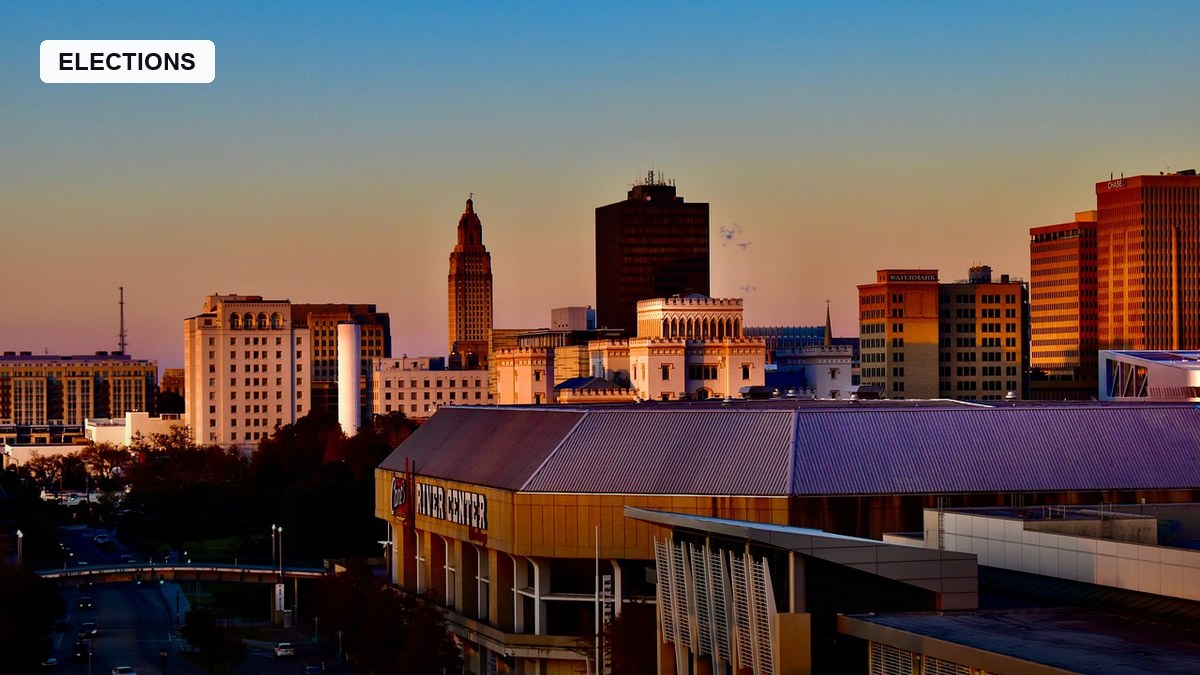
Louisiana’s legislative reapportionment committee closed a round of public hearings on October 1 without putting forward a replacement congressional map, more than five months after the Supreme Court’s ruling in Louisiana v. Callais gave the state a freer hand to redraw its districts along racial lines. The delay leaves Louisiana as one of the few states directly touched by the Callais decision that has yet to act on it, even as neighboring states move more aggressively. The committee’s inaction is notable precisely because Louisiana’s map was the subject of the ruling itself, meaning the state has had the clearest legal mandate of any in the country to redraw and has still chosen to wait.
What the Supreme Court Actually Decided
The Court ruled 6-3 on April 29 that Louisiana’s second majority-Black congressional district amounted to an unconstitutional racial gerrymander, with Justice Alito’s majority opinion reworking the 40-year-old legal framework from Thornburg v. Gingles that had governed Voting Rights Act challenges to electoral maps. Under the revised standard, plaintiffs must now show that racial bloc voting patterns cannot be explained by partisan affiliation alone — a considerably higher bar than before. Justice Kagan dissented, joined by Justices Sotomayor and Jackson.
A Ruling That Was Supposed to Trigger Redraws
Civil rights groups, including the NAACP Legal Defense Fund and the Campaign Legal Center, warned at the time that the decision would clear the way for Louisiana and other Southern states to dilute minority voting power by redrawing districts without the Section 2 constraints that had limited them. Georgia’s governor, Brian Kemp, moved quickly, calling a special legislative session in June explicitly in response to Callais. Yet Georgia’s own House Republicans ultimately shelved the redraw, with Speaker Jon Burns citing ongoing litigation elsewhere and a desire to see how the legal landscape settled before committing to new lines.
Why Louisiana Is Moving Slowly
Members of Louisiana’s reapportionment committee have offered competing explanations for the lack of a proposed map. Some lawmakers have pointed to continued uncertainty over whether a new map would itself draw fresh litigation, given that the plaintiffs who won in Callais could still contest a replacement district they view as retaliatory. Others have noted that Louisiana’s current map, already redrawn once in 2024 to create the second Black-majority district now at issue, would need to go through the same committee process a second time in three years, a logistical lift the legislature has been reluctant to rush.
The Political Stakes for November
Any new Louisiana map would not take effect in time to change the November 2026 midterm ballot regardless of what the committee eventually proposes, since candidate qualifying periods for the state’s current cycle have already passed. That timing has lowered the political urgency for lawmakers to act immediately, even though the Callais ruling technically gives them room to redraw districts for the 2028 cycle at their own pace.
Two Camps, One Waiting Game
Republican legislators close to the process argue that waiting is the prudent course, since a map drawn in haste risks being struck down just as the 2024 majority-Black district was, restarting the cycle yet again. Voting rights advocates see the delay differently, arguing that every month without a map is a month in which the state’s current, court-ordered district boundaries — which include the majority-Black seat now ruled unconstitutional — continue to elect a Democratic member of Congress, a outcome opponents of that district have spent years trying to undo.
What to Watch Next
The committee has not set a date for its next hearing, but legislative staff have indicated a map could be introduced during Louisiana’s next regular session, which convenes in the spring. Whatever the committee proposes will likely face an immediate legal challenge from the plaintiffs’ side regardless of its shape, meaning the state’s post-Callais map fight is likely to stretch well into the 2028 redistricting cycle before it is finally resolved. For voters in the district at the center of the case, that timeline means the congressional boundaries that elected their current representative will likely remain unchanged through at least one more election cycle, regardless of how the legal fight over the Voting Rights Act’s future ultimately plays out nationally.
Photo: cfontenot / PIXABAY via Pixabay

