
Nearly a year after a Manhattan court found that New York’s 11th Congressional District illegally dilutes minority voting strength, the fight over the lone Republican-held U.S. House seat in New York City remains unresolved, with appeals and a federal intervention having stalled any final redraw ahead of November’s election. The case, Williams v. Board of Elections of the State of New York, has pitted good-government and minority-voting advocates against the district’s incumbent and national Republicans in a dispute that touches both state constitutional law and the limits of federal court power over state redistricting.
A Ruling Grounded in the State Constitution
In a January 21, 2026 decision, Manhattan Supreme Court Justice Jeffrey Pearlman found that NY-11 — which covers all of Staten Island and a slice of Brooklyn and is currently represented by Republican Rep. Nicole Malliotakis — violates Article III, Section 4(c)(1) of the New York Constitution by diluting the votes of minority residents. Notably, Pearlman rejected the plaintiffs’ separate claim under the state’s Voting Rights Act, holding that the law’s vote-dilution provisions do not extend to congressional districts; instead, he ruled the state constitution itself offers “greater protections against racial vote dilution” than either the federal Constitution or the federal Voting Rights Act.
Applying a Familiar Legal Test
In reaching his conclusion, Pearlman applied factors drawn from the landmark federal case Thornburg v. Gingles, finding a history of discrimination against minority voters, patterns of racially polarized voting that make it difficult for minority-preferred candidates to prevail, and a history of racial appeals in the district’s elections. He declined, however, to adopt the specific replacement map proposed by the Manhattan and Staten Island voters who brought the case, instead ordering New York’s Independent Redistricting Commission to draw new lines by February 6, relying on precedent from the state Court of Appeals in Harkenrider v. Hochul and Hoffmann v. NYS IRC.
Malliotakis and Republicans Push Back
Rep. Malliotakis, who intervened in the case along with district voters and the two Republican commissioners on the New York State Board of Elections, unsuccessfully moved to dismiss the suit before Pearlman’s ruling and has since vowed to appeal. An appellate panel subsequently upheld Pearlman’s decision and lifted a stay that had paused the Independent Redistricting Commission’s work, clearing the way for a new map to be drawn — though the process has not reached a final map as of this fall.
A Federal Objection From Washington
The dispute drew attention well beyond New York when the Trump administration urged the Supreme Court to reject any new district lines, with administration lawyers calling the redraw an “open and unabashed racial gerrymander” against the state’s only Republican-held congressional seat in the five boroughs. That intervention reflects a broader pattern this cycle of the federal government weighing in on state-level redistricting disputes that would ordinarily be resolved purely under state law.
Competing Visions of Fairness
Plaintiffs and allied voting rights groups argue that NY-11’s current boundaries were deliberately engineered to pack Staten Island’s more conservative, heavily White electorate with just enough of Brooklyn to preserve a Republican seat, diluting the influence of Black and Latino voters in the process. Malliotakis and her allies counter that the lines reflect Staten Island’s natural geographic and community-of-interest boundaries, and that redrawing the district now — years into the decade and amid a Supreme Court that has separately narrowed Voting Rights Act claims — amounts to a politically motivated effort to eliminate the only Republican seat in New York City.
What’s Next
With the Supreme Court’s involvement adding uncertainty to a process that state courts had already set in motion, the practical boundaries of NY-11 for the November 2026 election remain unsettled. Should the Independent Redistricting Commission’s new map take effect, it would reshape one of the most closely watched House races in the country; if Malliotakis’s appeal succeeds in halting the process, the current lines could remain in place through the midterms, with the broader legal question of how far state courts can go in ordering congressional redraws left for a future ruling.
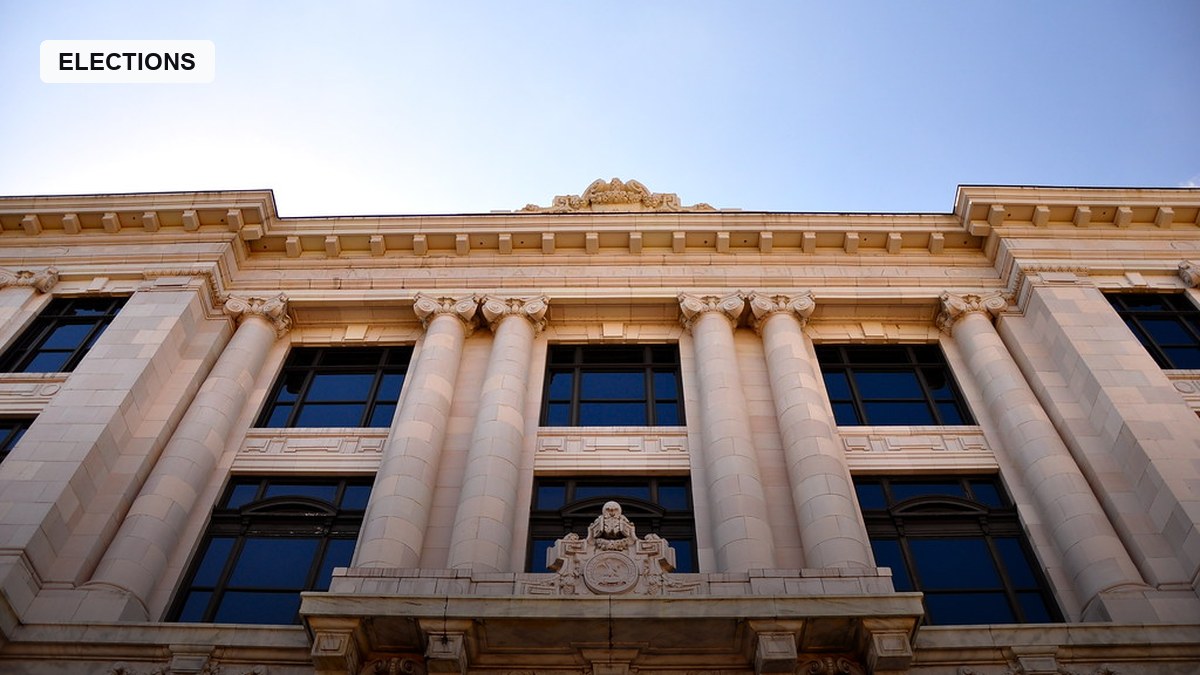
Photo: kimberlykv / BY via flickr

