
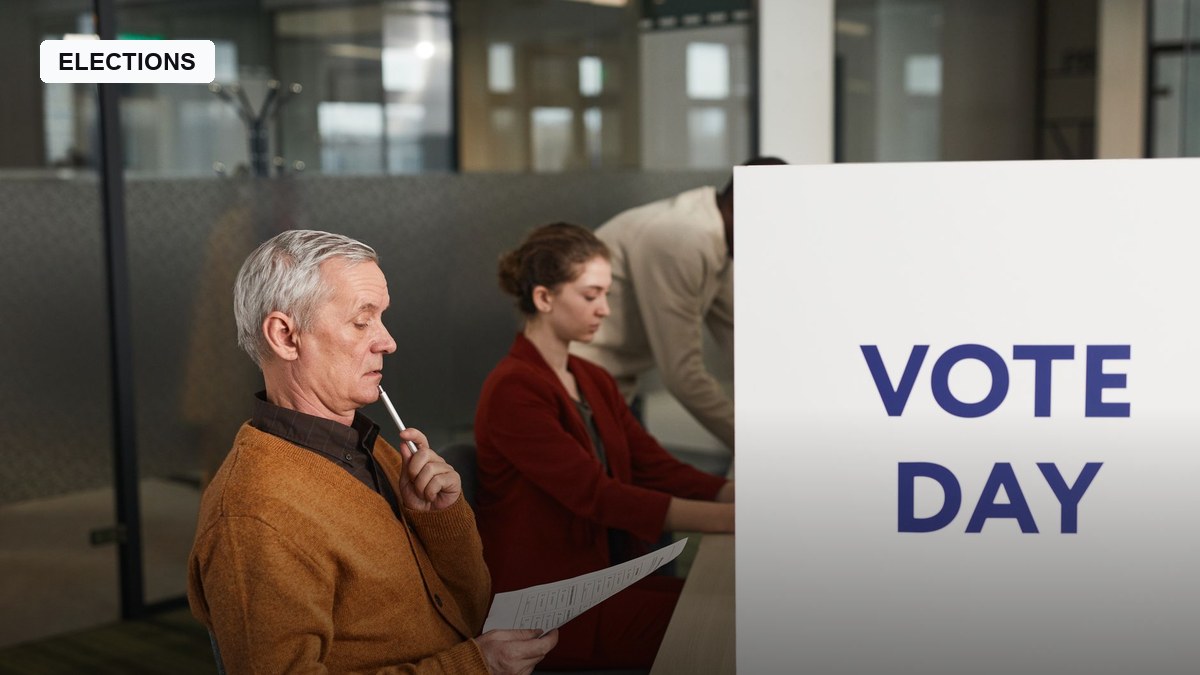
With roughly three weeks until the November 3 midterms, election offices nationwide are still working to fill poll worker rosters, a recurring challenge that has taken on added political dimensions as both major parties build their own volunteer networks to staff and monitor polling places.
A Nationwide Recruitment Drive
The U.S. Election Assistance Commission marked Help America Vote Day on January 27, 2026 by formally calling on Americans to sign up as poll workers ahead of the midterms, framing early recruitment as essential given how long training and credentialing can take at the county level. The agency’s push reflected survey data from the 2024 election cycle showing that 48 percent of election jurisdictions reported having a very or somewhat difficult time recruiting enough poll workers for their communities, a figure the EAC cited as justification for starting the 2026 campaign nearly a year before Election Day.
The Scope of the Shortage
Poll worker advocacy groups have long estimated that roughly 1 million temporary workers are needed nationwide to fully staff a major election, a figure that includes everyone from site managers to Election Day greeters and ballot scanners. Power the Polls, a nonpartisan recruitment coalition, wrote in an April 2026 update that with primary elections already underway in multiple states, there is an urgent need for poll workers, underscoring that the shortage is not confined to the general election but recurs in every primary and runoff along the way.
Parties Build Their Own Election Armies
Beyond nonpartisan recruitment, both major parties have ramped up efforts to recruit volunteers, including poll watchers and election-day staff, as part of broader midterm organizing. The Republican National Committee has reported 16,971 volunteer signups nationwide through its recruitment program, compared with 11,917 at the same point in the 2024 presidential cycle, a pace the party has cited as evidence of heightened grassroots enthusiasm heading into November. Democratic committees have mounted parallel recruitment efforts of their own, though without releasing directly comparable figures, reflecting how what was once a purely administrative staffing problem has increasingly become intertwined with each party’s get-out-the-vote infrastructure. Election officials have generally welcomed the extra volunteers while stressing that partisan poll watchers operate under different rules and training than the nonpartisan poll workers who actually run check-in tables, issue ballots, and operate voting equipment, a distinction that can get lost in campaign messaging that uses similar language for both roles.
A Workforce Under Strain Since 2020
Recruitment numbers alone do not capture why the job has become harder to fill. Reporting since the 2020 election has documented sustained threats and harassment directed at election workers, a trend that, according to a 2024 ABC News review of the issue, had not meaningfully slowed even years after the 2020 vote. That climate has pushed experienced poll workers and county election administrators to leave the field altogether in some jurisdictions, compounding ordinary attrition from an aging volunteer base and forcing county boards to train replacements from scratch in cycle after cycle.
National Recruitment Day and Local Response
States and counties have layered their own efforts atop the EAC’s national campaign, including a National Poll Worker Recruitment Day held August 12, when election offices and partner organizations hosted sign-up drives aimed at reaching first-time volunteers, students, and bilingual residents who can help serve non-English-speaking voters. Local officials in jurisdictions that have historically struggled to staff elections, including parts of West Virginia, have used the day to publicly renew appeals for applicants, citing ongoing shortages that predate the 2026 cycle.
What’s Next Before Election Day
With early voting already underway in dozens of states, the remaining weeks represent the last practical window for county election offices to finish staffing, train new recruits, and assign them to polling locations before November 3. Jurisdictions that fall short risk consolidating precincts, extending wait times, or relying on overworked veteran poll workers to cover multiple roles, outcomes that can fuel public frustration and, in close races, invite legal challenges over access and wait times. Election administrators say the stakes of getting staffing right are higher than usual this cycle, given how many competitive House, Senate, and statewide races are expected to be decided by narrow margins, making smooth, adequately staffed polling places as consequential to the outcome as any single campaign ad or get-out-the-vote push.
Photo: Edmond Dantès / PEXELS via Pexels

