Georgia Republicans settled a chaotic and unusually divisive Senate primary this summer when Rep. Mike Collins defeated former University of Tennessee football coach Derek Dooley in a runoff, winning roughly 55% to 45% with Trump’s endorsement helping tip the race in the final days. The result sets up a general election clash with Democratic incumbent Sen. Jon Ossoff, in a contest both parties view as pivotal to control of the chamber, even as Republican strategists privately worry that the primary left their nominee bruised and underfunded heading into the fall.
A Crowded, Combative Primary
Collins, a hardline conservative from Georgia’s 10th Congressional District, entered the initial primary against a wide GOP field that included Dooley, a political newcomer recruited in part for his statewide name recognition from his coaching career, and other Republicans such as Vernon Jones. Because no candidate cleared a majority in the first round, the race advanced to a head-to-head runoff between Collins and Dooley. Trump initially stayed on the sidelines for much of the runoff before issuing a last-minute endorsement of Collins, a move Fox News and other outlets described as risky given uncertainty over turnout, but one that appears to have consolidated the conservative base behind him in the final stretch.
Collins’s Vulnerabilities
Collins advances to the general election carrying real liabilities. He has a combative and often controversial presence on social media, holds a hardline anti-abortion position that could complicate his appeal to moderate suburban voters, and faces a pending ethics investigation tied to his conduct, according to reporting from Time and Newsweek. Republican strategists interviewed by Time described the primary fight as having left the party’s Senate recruitment effort in Georgia “a mess,” with Collins needing to prove quickly that he can run a disciplined statewide campaign and keep pace financially with Ossoff, who has built one of the best-funded Senate campaigns in the country.
Ossoff’s Strong Position
Ossoff, seeking a second term after his narrow 2021 special-election victory, begins the general election in a comparatively strong position. An Emerson College poll conducted this summer showed Ossoff starting his re-election bid near 50% support and outpacing the entire Republican field tested against him, including Collins. Ossoff has spent his first term cultivating a reputation as an aggressive investigator of federal contracting and consumer protection issues, a record his campaign is expected to lean on heavily as it seeks to define the race before Collins can reintroduce himself to general-election voters.
Why Georgia Remains a Top-Tier Battleground
Georgia has been at the center of the nation’s most closely fought statewide elections since 2020, when the state flipped for a Democratic presidential candidate for the first time in decades and delivered two Democratic Senate seats within months of each other. Republicans have made retaking one of those seats a top priority for 2026, viewing Georgia’s rightward drift in more recent statewide races as evidence the state remains gettable. Democrats counter that Ossoff’s incumbency, fundraising advantage and Collins’s primary-season baggage give them a genuine opportunity to hold the seat despite the state’s competitive lean.
The Stakes for Senate Control
With Republicans holding a 53-47 Senate majority, Georgia is one of a handful of races — alongside North Carolina, New Hampshire and Maine — that both parties view as central to determining whether Democrats can claw back the chamber or Republicans can expand their margin. A Collins win would be a significant pickup for the GOP in a state Trump has continued to contest rhetorically since his 2020 loss there; an Ossoff win would deal Republicans a symbolic defeat in a state they invested heavily in flipping.
A Runoff Shaped by Low Turnout and Late Money
Turnout in the runoff fell well below the initial primary, a familiar pattern in Georgia’s two-round system that tends to reward the candidate with the more energized, better-organized base rather than the broadest general appeal. Dooley, despite his statewide name recognition and an aggressive advertising push funded partly with his own resources, struggled to translate familiarity into runoff turnout once the contest narrowed to a straight ideological choice for the most committed Republican primary voters. Collins’s campaign leaned heavily on Trump’s late endorsement in digital and radio advertising during the final ten days, a strategy Georgia GOP operatives credit with driving rural conservative turnout that offset Dooley’s stronger performance in suburban Atlanta counties.
Fundraising Gap Remains Collins’s Biggest Problem
Campaign finance filings show Ossoff entering the general election with a cash-on-hand advantage of several multiples over Collins, a gap built over years of the incumbent’s national small-dollar fundraising appeal tied to his committee investigations into federal contracting fraud. Republican fundraising consultants quoted in Georgia political trade publications say Collins will need outside spending from groups such as the Senate Leadership Fund to remain competitive on television, since the runoff drained resources from a primary fight both leading Republican candidates had expected to be shorter and less expensive.
What’s Next
Collins now faces the task of unifying a Republican Party still absorbing a divisive runoff while rapidly building a statewide fundraising operation to compete with Ossoff’s financial advantage. Expect national Republican groups to inject significant outside money into Georgia in the coming weeks to offset Collins’s fundraising gap, while Ossoff’s campaign works to define Collins around his ethics investigation and social media record before the Republican can reset his image with general-election voters. Additional general-election polling in the coming weeks will show whether Ossoff’s early summer lead holds as the race gets more national attention and money.
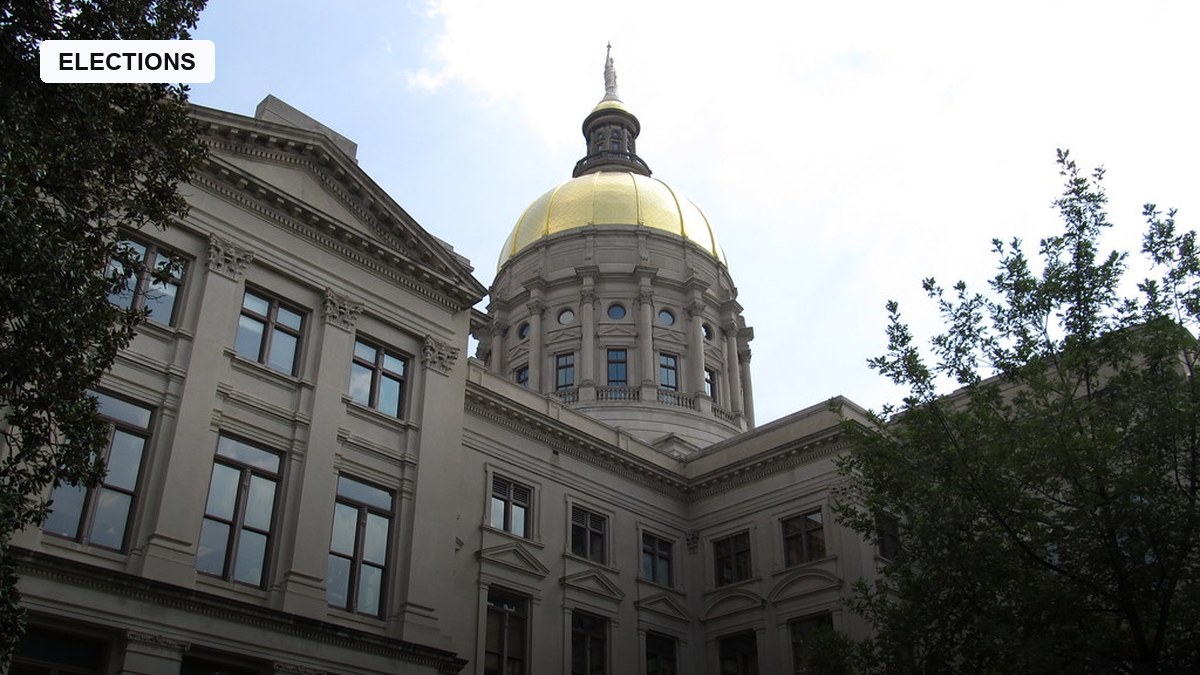
Photo: Ken Lund / BY-SA via flickr