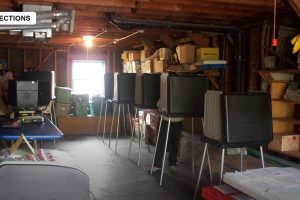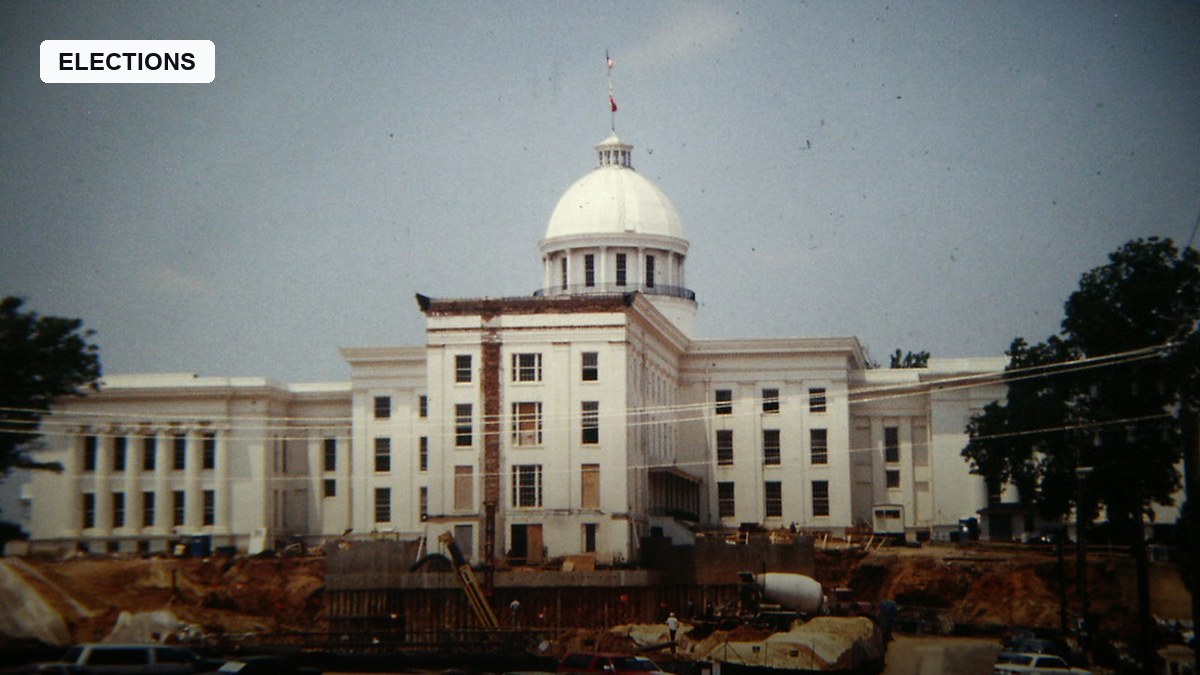
Alabama voters went to the polls Tuesday, August 11, 2026, to choose party nominees in special primary elections held in four of the state’s seven congressional districts — the direct result of a court-forced map redraw that eliminates one of the state’s two majority-Black districts currently held by Democrats. The primaries, held with no possibility of a runoff, mark the first real test of a new district map drawn after the U.S. Supreme Court lifted restrictions on the state in May.
Why Alabama Redrew Its Map Mid-Cycle
The special elections trace back to a U.S. Supreme Court ruling out of Louisiana that narrowed Section 2 of the Voting Rights Act, prompting several Republican-controlled Southern states to revisit congressional maps drawn under the old legal standard. Alabama Governor Kay Ivey called state legislators into a special session after the Supreme Court cleared the way for redistricting on May 11, 2026. Lawmakers redrew the boundaries of the 1st, 2nd, 6th and 7th districts, forcing new primaries in all four.
District 2: A Decisive First-Ballot Win
In the newly configured 2nd District, Republican Rhett Marques won the nomination outright, taking 50.0% of the vote — 16,411 ballots — against five rivals. Hampton Harris finished second with 21.6% (7,100 votes), followed by David Matthews at 17.4% (5,716 votes), Joshua McKee at 4.7%, James Richardson at 3.3% and Christian Horn at 2.9%. Under the district’s old lines, Black voters made up roughly half the population; under the new map, that share falls to about 40%, a shift election analysts say was central to the district flipping from a competitive seat to a safer Republican one.
District 6: Palmer and Mercer Advance
In the 6th District, Republican incumbent-aligned candidate Gary Palmer won his party’s special primary, while Maurice Mercer captured the Democratic nomination. The district, like District 2, was reconfigured under the new map, and both nominees now advance to the general election under boundaries substantially different from the ones in place for the 2024 cycle.
The Bigger Picture: One Fewer Black-Opportunity District
Taken together, the four primaries reflect a map that eliminates one of Alabama’s two majority-Black congressional districts, a change civil-rights groups and Democratic officials have criticized as a direct rollback of gains made after years of Voting Rights Act litigation. Republican legislators who drew the map have defended it as compliant with the Supreme Court’s narrowed reading of Section 2, arguing that race-conscious district lines are no longer required to the same degree they once were.
Part of a Broader Post-Ruling Redistricting Wave
Alabama is not alone. Roughly ten states have reconfigured congressional maps since 2025 as part of a broader partisan push tied to the 2026 midterms, with courts in several states — including Louisiana and California — weighing in on competing maps within weeks of ballots being finalized. Critics, including some sitting federal judges, have accused the Supreme Court of intervening in ways that upend settled maps too close to an election, even as the Court has historically warned lower courts against doing exactly that.
What Comes Next
The nominees chosen Tuesday now head into the general election phase of the 2026 midterms under boundaries that will likely face continued legal challenges even after November’s vote. Alabama’s secretary of state is expected to certify the special primary results in the coming days, and national Democratic and Republican campaign committees are already recalibrating their targeting lists for the four redrawn districts, with the loss of a majority-Black seat expected to remain a flashpoint in redistricting litigation well beyond this election cycle.