South Carolina Attorney General Alan Wilson decisively defeated Lt. Gov. Pamela Evette in a June 23 Republican runoff, capturing the party’s gubernatorial nomination by a nearly two-to-one margin and setting up a general election contest for the seat being vacated by term-limited Gov. Henry McMaster. The result caps a crowded and unusually contentious GOP primary that at one point drew competing endorsements from President Donald Trump.
A Crowded Primary Field
Wilson’s path to the nomination ran through one of the most competitive Republican gubernatorial primaries in recent South Carolina history. His rivals included U.S. Reps. Nancy Mace and Ralph Norman, Lt. Gov. Pamela Evette, and state Sen. Josh Kimbrell. With McMaster barred from seeking a third consecutive term, the open seat drew a wave of ambitious statewide and federal officeholders, reflecting how rare a genuinely open governor’s race is in a state where incumbents typically seek reelection unopposed within their own party.
Trump’s Dual Endorsement
The race took an unusual turn when Trump initially endorsed Evette ahead of the first-round primary on June 9, only to add a co-endorsement of Wilson before the June 23 runoff after Wilson also picked up support from several eliminated rivals, including Mace and Norman supporters looking for a consolidation candidate. That late shift is widely credited by South Carolina political observers with helping propel Wilson to his commanding runoff victory.
Who Is Alan Wilson
Wilson has served as South Carolina’s attorney general since 2011, making him one of the longest-serving statewide officials in the race. He built his campaign around a law-and-order message and a promise to continue the state’s conservative fiscal and social policy trajectory established under McMaster and his predecessor, Nikki Haley. Evette, who has served as lieutenant governor since 2019, ran on her record building the state’s workforce development programs and had positioned herself as the continuity candidate before falling well short in the runoff.
The Democratic Field
On the Democratic side, primary contenders Justin A. Bennett, Jermaine Johnson, Mullins McLeod and Billy Webster competed for a nomination in a state Republicans have dominated at the statewide level for a generation. South Carolina has not elected a Democratic governor since Jim Hodges left office in 2003, giving whichever Democrat emerges an uphill climb against a well-funded, well-known Republican nominee in Wilson.
Why the Runoff Was a Blowout
Political analysts attribute Wilson’s roughly two-to-one runoff margin to a combination of statewide name recognition built over three terms as attorney general, a consolidated conservative coalition after Trump’s late endorsement, and Evette’s inability to distinguish her platform sufficiently from Wilson’s during the run-off period. The result reinforces a pattern seen in several other Southern gubernatorial primaries this cycle, where late Trump endorsements have proven decisive in determining runoff outcomes even after the president initially backed a different candidate.
Reaction From Both Camps
Wilson’s campaign framed the runoff result as a mandate for a conservative agenda built around continuing McMaster-era tax and regulatory policy, with Wilson telling supporters on election night that the result reflected a unified party ready to move past a divisive primary. Evette, in her concession, thanked her supporters and pledged to back Wilson in the general election, a move aimed at avoiding the kind of lingering intraparty rift that has hampered Republican nominees elsewhere after bruising runoffs. Mace and Norman, whose eliminated candidacies fed into Wilson’s late surge, have also publicly endorsed him, suggesting the party’s various factions are consolidating relatively quickly compared to some other statewide primaries this cycle.
What’s Next for South Carolina
With the Republican nomination settled, attention now turns to the general election on November 3, where Wilson is heavily favored in a state Trump carried by wide margins in 2024. Still, Democrats argue that an open seat — rather than an incumbent running for reelection — gives their eventual nominee a marginally better opportunity than in a typical South Carolina cycle. Wilson’s campaign is expected to begin consolidating establishment Republican support and fundraising through the fall, while South Carolina Democrats will look to their own late-summer primary runoff to determine which candidate carries the party’s banner into a race most forecasters still rate as safely Republican. Down-ballot Republicans in the state legislature are also watching the race closely, as a decisive Wilson win could help carry other statewide GOP candidates over the finish line in November, while any unexpected weakness could complicate the party’s efforts to maintain its supermajority in the legislature.
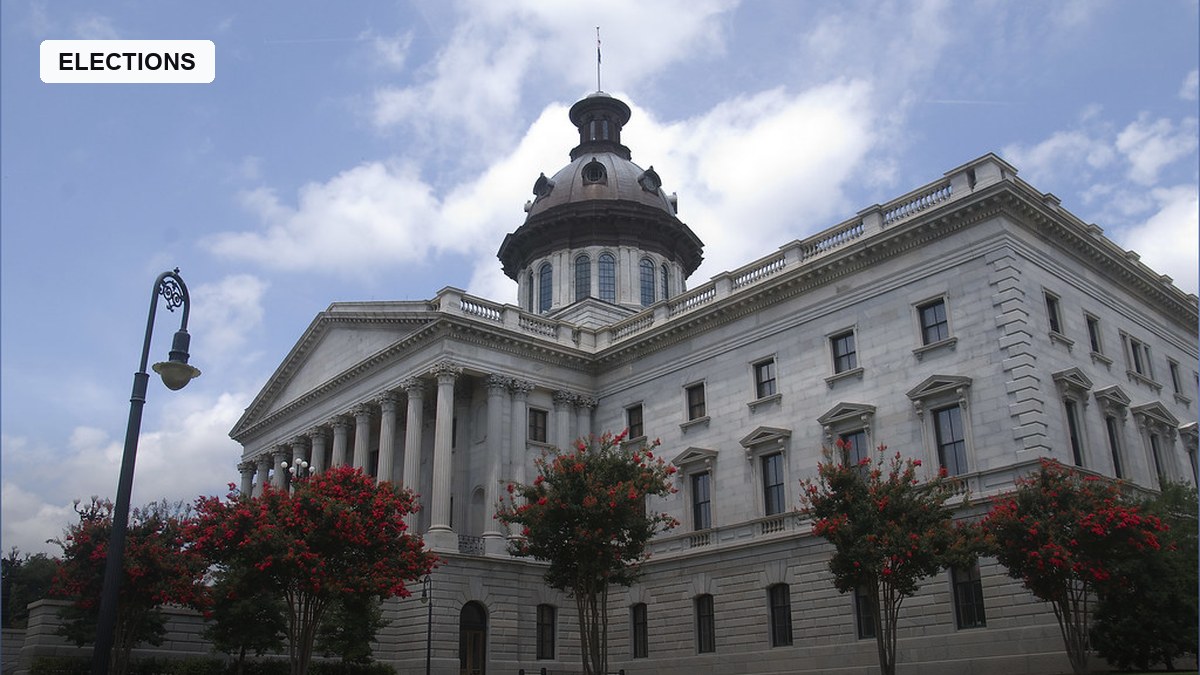
Photo: Ron Cogswell / BY via flickr