
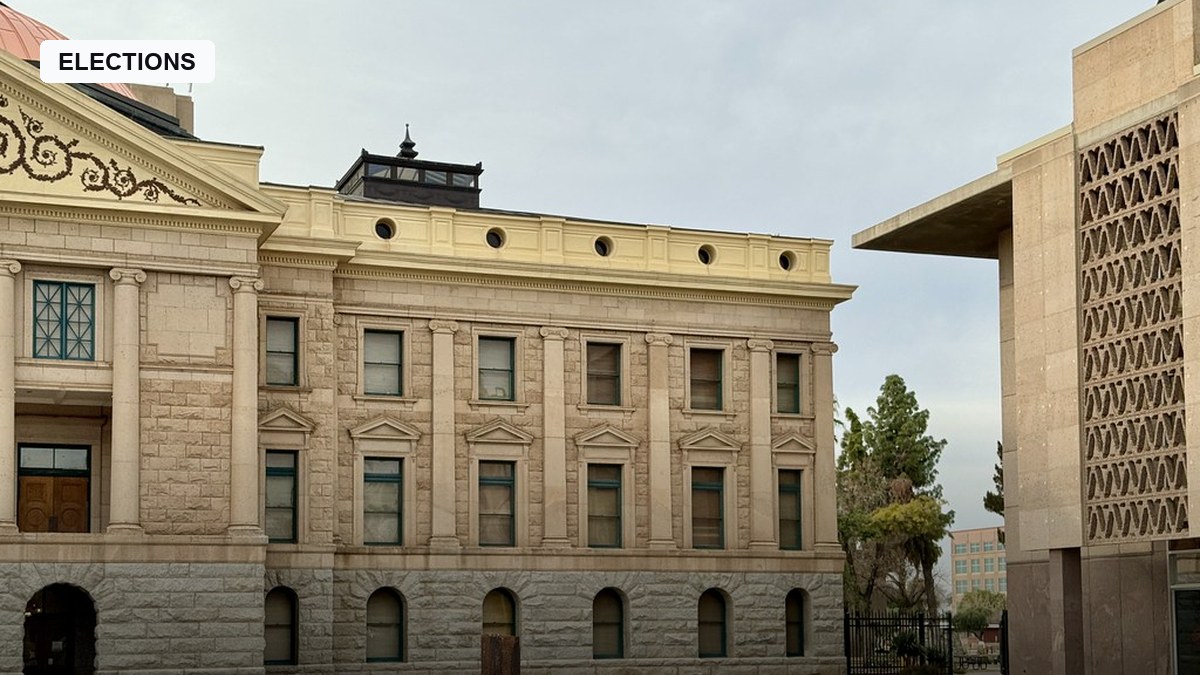
Arizona’s Citizens Clean Elections Commission told a Maricopa County Superior Court judge on September 23 that it has both the authority and the obligation to keep investigating three statewide candidates accused of falsifying the small-dollar donations required to unlock a combined $4.7 million in public campaign funding, escalating a legal fight that has put the state’s decades-old public financing system under direct strain seven weeks before the midterms.
How the Alleged Scheme Worked
Green Party candidates Risa Lombardo, running for governor, and Duwayne Collier, running for secretary of state, along with Republican gubernatorial candidate Scott Neely, each needed to collect thousands of qualifying five-dollar contributions from Arizona voters to access public campaign funds under the state’s Clean Elections system. Lombardo’s campaign unlocked $2.8 million and Collier’s about $740,000 after each reported gathering roughly 2,500 qualifying contributions between November 2025 and April 2026. Commission investigators found that despite months of reported small-dollar giving, the candidates deposited the collected money in lump sums in May, with Lombardo and Collier both making their deposits on the very same day they applied for public funding, and Neely depositing his roughly a week before applying. At least six voters listed as donors have told investigators they have no idea why their names appear on the contribution records at all.
From Investigation to Lawsuit
After Clean Elections executive director Thomas Collins told commissioners in August that he had found evidence questioning the validity of the donations, the commission voted unanimously to continue investigating all three candidates rather than closing the case. Lombardo and Collier responded by suing the commission in Maricopa County Superior Court on September 10, arguing the investigation itself violates their First Amendment rights and amounts to the state punishing them for their political association as Green Party candidates. The commission’s September 23 court filing pushed back directly, arguing that policing whether candidates actually qualified for the public money they received is squarely within its legally mandated job of protecting the integrity of Arizona’s public campaign finance system, not a pretext for viewpoint discrimination.
A System Built to Insulate Candidates From Big Money
Arizona’s Clean Elections system, created by a 1998 voter initiative, allows candidates who forgo private fundraising to qualify for public grants once they demonstrate grassroots support through a set number of small, verified contributions — a mechanism designed to let candidates without wealthy donor networks compete on more even footing. That design depends entirely on the integrity of the qualifying-contribution process; if candidates can fabricate small-dollar donations to trigger six- or seven-figure public grants, the safeguard meant to reward genuine grassroots support instead becomes a vulnerability that drains public money toward campaigns that never had the organic backing the system is supposed to certify.
Fringe Candidates, Real Stakes for the Ballot
Neither Lombardo nor Collier is considered a frontrunner in a governor’s or secretary of state’s race dominated by major-party candidates, and critics of the pair have characterized their campaigns as fringe efforts unlikely to win outright. But election administration specialists note that the case matters regardless of the candidates’ electoral odds, since a successful scheme to fraudulently unlock millions in taxpayer-funded campaign grants would expose a structural weakness in a financing system that more than a dozen other states have modeled their own public-funding programs on. Arizona officials have also flagged the timing risk: with the investigation still unresolved just weeks before Election Day, the commission faces pressure to reach a conclusion before ballots are finalized, without appearing to rush a decision that could later be challenged in court.
Arguments on Both Sides
Attorneys for Lombardo and Collier argue the commission’s continued probe, and the prospect of demanding repayment of public funds already spent on their campaigns, functions as a de facto financial punishment against minor-party candidates that major-party campaigns rarely face with the same intensity of scrutiny. The commission counters that its legal duty runs to taxpayers and to the broader pool of candidates who followed the rules honestly, arguing that letting the lump-sum deposit pattern and disputed donor names go unexamined simply because the candidates belong to a minor party would gut the commission’s enforcement credibility for every future election cycle. A separate, related suit filed by other candidates accuses Clean Elections of threatening candidates into suspending campaigns altogether, a claim the commission has also disputed in filings.
What Happens Next
The Maricopa County judge overseeing the case must now decide whether the commission’s investigation can proceed while the First Amendment lawsuit is pending, a ruling expected in the coming weeks that will determine whether Lombardo, Collier and Neely face possible repayment orders or referral for criminal charges before votes are cast. Clean Elections officials have said the commission intends to pursue the inquiry to its conclusion regardless of the litigation’s outcome, setting up a test of how aggressively a state agency can claw back public campaign money once a fraud allegation surfaces this close to an election.
Photo: w_lemay / BY-SA via flickr

