
A ballot initiative that would require California voters to show photo identification at the polls and prove citizenship when registering has cleared a major hurdle, with organizers announcing in Fresno on March 3, 2026 that they had submitted more than 1 million signatures — well above the roughly 875,000 valid signatures required to qualify for the November 2026 ballot. The measure, known as the California Voter I-D Initiative of 2026, now moves to county election officials and the Secretary of State for verification.
What the Measure Would Require
Under the initiative, voters casting ballots in person would need to present a government-issued photo ID, such as a driver’s license, passport, or military identification card. People registering to vote for the first time would need to supply proof of citizenship — a birth certificate, naturalization certificate, or certificate of citizenship. Voters who cast ballots by mail, which make up the large majority of California’s electorate, would be required to write the last four digits of a government-issued ID number on their return envelope rather than present a physical card.
The Coalition Behind the Drive
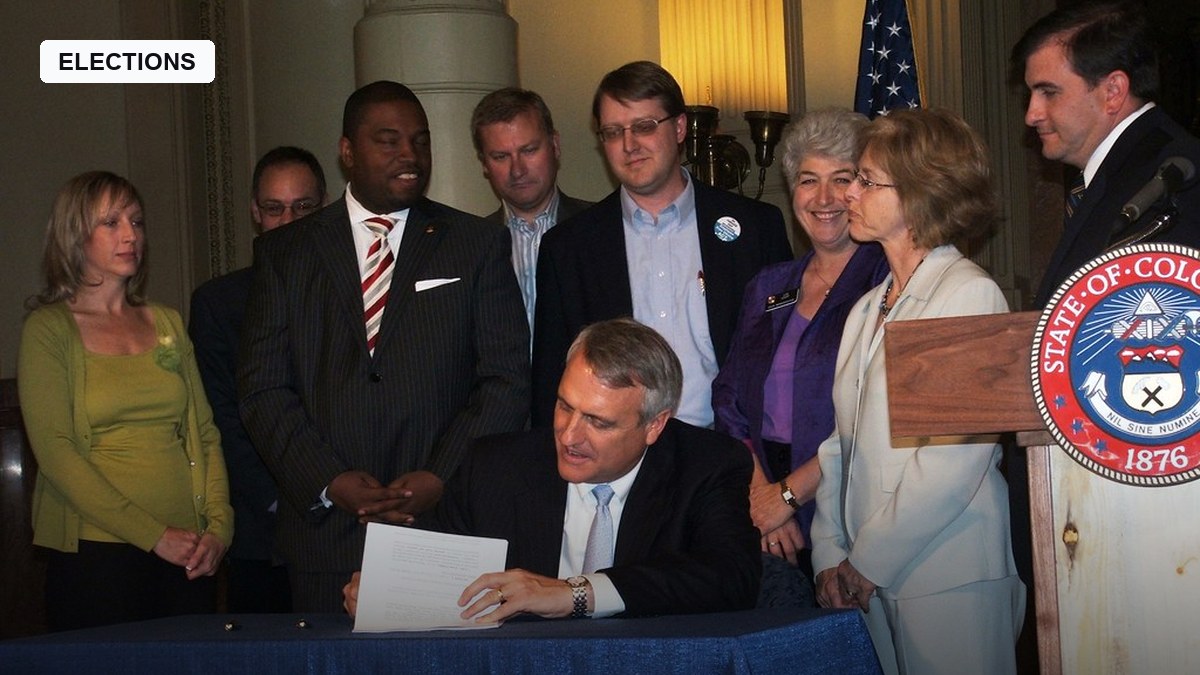
Assemblyman David Tangipa, a Republican representing California’s Eighth District, has been the most visible face of the campaign, which operates under the banner of Reform California. State and local leaders gathered with Tangipa in downtown Fresno to mark the signature milestone. ‘Our measure simply holds government officials accountable to maintain accurate voter lists,’ Tangipa said, adding, ‘it’s one vote, it’s one person, and it’s one voice.’ Addressing concerns about the burden of obtaining documents, Tangipa argued the requirement was not onerous, saying ‘anybody in Fresno County can go to the registrar’s office and get their birth certificate.’
The Evidence Both Sides Are Citing
Backers point to a Heritage Foundation tally recording 71 cases of voter fraud in California between 1993 and 2026, along with a California Research Bureau report noting that 14 counties filed assessments of voter-fraud risk tied to elections held between 2020 and 2024. Nationally, the National Conference of State Legislatures counts 36 states with some form of voter ID law already on the books, a figure supporters cite to argue California is an outlier rather than a trailblazer.
Opponents counter with research from the Center for Democracy and Civic Engagement, which cites 2020-era studies finding that in states with strict photo ID laws, more than 3 million voting-age citizens lacked a current driver’s license and over 1 million lacked any current government-issued photo ID — with underrepresented racial and ethnic groups disproportionately affected.
Voting Rights Advocates Push Back
Angélica Salceda, director of the ACLU of Northern California, has been among the most prominent critics, arguing the measure amounts to voter suppression dressed up as administrative housekeeping. She points out that obtaining a birth certificate often requires taking time off work and arranging transportation to a government office — a burden that falls hardest on lower-income voters — and notes that people who have changed their legal name, such as through marriage, could face additional complications proving their identity matches their registration record. ‘That’s going to impact you at the ballot box,’ Salceda said.
A Measure Already Shaping 2026 Campaigns
Even before formal qualification, the initiative has become a flashpoint in races up and down the ballot, with Tangipa and allied Republican officials treating the signature-gathering success as evidence of grassroots momentum for stricter election rules, while Democratic officials and civil rights groups have begun organizing opposition messaging aimed at framing the measure as a rollback of ballot access in a state where mail voting is the dominant method of casting a ballot.
What’s Next
County elections officials and the Secretary of State must now verify a random sample of the submitted signatures to confirm the initiative has enough valid registered-voter signatures to qualify — a process that typically takes several weeks and determines whether the measure actually appears before voters in November. If it qualifies, California would join the 36 states the NCSL already counts as having some voter ID requirement, but with a hybrid system — in-person photo ID alongside a partial-digit identifier for mail ballots — that would be unusual given how heavily the state’s electorate relies on voting by mail. Both sides say they are preparing for a costly campaign season regardless of the outcome, given how directly the measure could reshape turnout in a state where mail ballots routinely account for the overwhelming majority of votes cast.
Photo: AFL-CIO Field / BY via flickr

