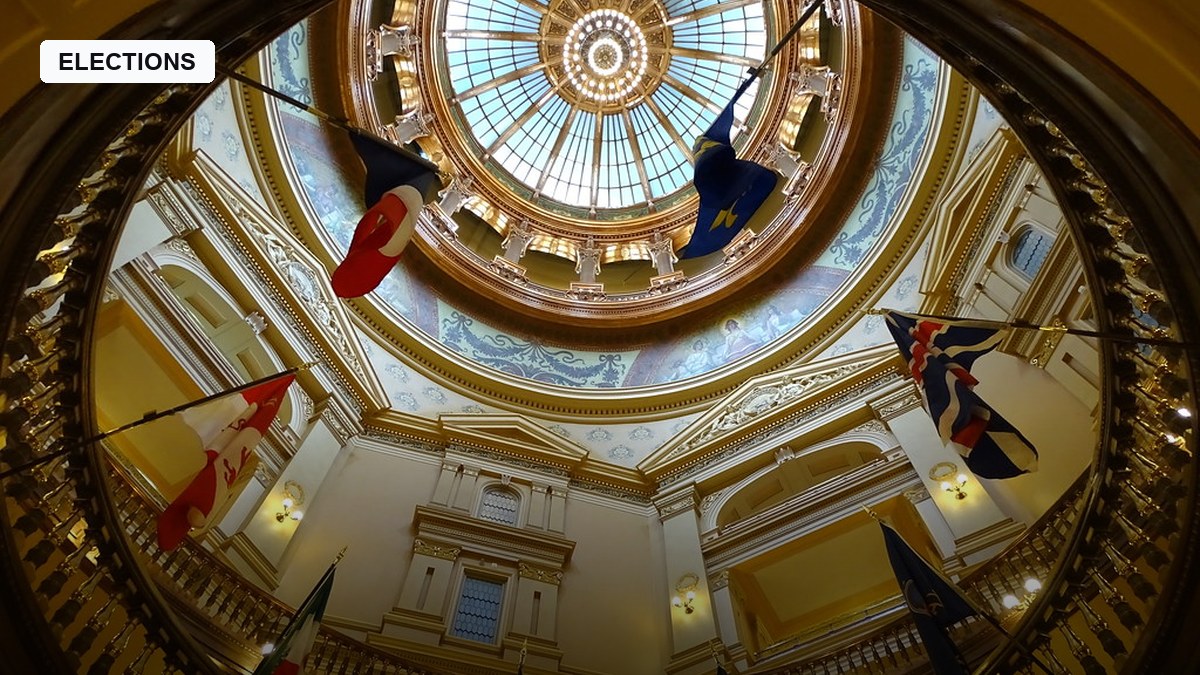
State Sen. Cindy Holscher won the Kansas Democratic primary for governor on August 4, defeating state Sen. Ethan Corson despite outgoing Gov. Laura Kelly’s public backing of Corson in the race to succeed her. Holscher took 49% of the vote to Corson’s 39%, with Overland Park Mayor Curt Skoog capturing the remaining 13%, according to results reported by the Kansas Reflector and confirmed on election night by NBC News and the Washington Post’s live results tracker.
An Open Seat in a Trump State
Kelly, a two-term Democrat, is term-limited and cannot seek a third consecutive term, making Kansas’s governorship one of five Democratic-held seats up for election in 2026 — and the only one of those five located in a state Trump carried by double digits in 2024. That dynamic has made the race a top target for national Republicans eager to flip a Democratic governorship in unmistakably red territory.
The Republican Nominee
On the Republican side, Kansas Senate President Ty Masterson won his party’s primary with Trump’s endorsement, positioning himself as the standard-bearer for a GOP that has controlled the legislature throughout Kelly’s tenure but has been unable to capture the governor’s mansion. Masterson has built his legislative career around tax-cut and school-choice legislation, often clashing directly with Kelly’s vetoes.
Why Holscher’s Win Surprised Observers
Kelly’s endorsement of Corson was widely viewed within the party as an effort to hand-pick a moderate successor capable of replicating her coalition of suburban and rural crossover voters. Holscher’s victory despite that opposition signals a Democratic primary electorate more receptive to her more assertive, progressive-leaning message, built around expanding Medicaid access and increased public school funding. Political analysts in Topeka noted that Holscher’s base in the vote-rich Kansas City suburbs of Johnson County — the same region that has powered recent Democratic statewide wins — gave her a decisive advantage over Corson’s more centrist appeal.
The General Election Outlook
Despite Holscher’s primary win, forecasters including 270toWin currently rate the general election as “Lean Republican,” projecting a roughly 52.5% to 47.5% edge for Masterson in a state Trump won by 16.1 points in 2024. Kelly herself won two terms by building a coalition of moderate Republicans and independents skeptical of the GOP legislature’s more conservative flank — a coalition Holscher, seen as further to the left than Kelly, will need to at least partially replicate to keep the governorship in Democratic hands.
What Republicans and Democrats Are Saying
Masterson’s campaign argues that Holscher’s primary win, powered by a comparatively narrow and more liberal coalition, makes her a weaker general-election candidate than Corson would have been, and points to Kansas’s deep red presidential lean as evidence the seat is now Republicans’ to lose. Democrats counter that Kelly won twice in a similarly red environment by focusing on kitchen-table issues like public education funding and Medicaid expansion, and argue Holscher can execute a similar strategy while energizing progressive turnout that Corson might not have generated.
Kelly’s Legacy on the Line
Kelly, first elected in 2018 and reelected in 2022, built her governorship around vetoing conservative legislation on abortion, transgender athletics and tax cuts she argued were fiscally reckless, while cultivating relationships with moderate Republican legislators willing to sustain her vetoes. Her decision to publicly back Corson over Holscher reflected a belief that a more centrist nominee would be better positioned to hold together the same coalition. Holscher’s win despite that opposition raises questions about whether Kelly’s brand of pragmatic, veto-driven governance can be replicated by a successor with a more progressive record, or whether Kansas Democrats are entering a new phase defined by a different political style.
Holscher’s Legislative Record
Holscher, who represents a Johnson County-based state Senate district, has built her legislative career around public education funding fights and has been a vocal critic of the legislature’s efforts to expand private school voucher programs. Her supporters argue that record will help her mobilize the same suburban Kansas City-area voters who have been key to recent Democratic overperformance in local and legislative races, even as statewide federal races have moved sharply toward Republicans.
What’s Next
The race now shifts to a three-month general election sprint, with Masterson expected to lean heavily on his Trump endorsement and legislative record, while Holscher works to unify the Democratic coalition that split between three candidates in the primary and reassure moderate voters uneasy about her more progressive positioning. Kansas will be closely watched nationally as a test of whether Democrats can hold a governorship in a state that has grown increasingly Republican at the federal level, with additional polling expected in the coming weeks as both campaigns ramp up fall advertising. National Democratic and Republican governors’ associations are both expected to invest heavily in the race, given its symbolic importance as one of the only Trump-won states currently held by a Democratic governor.
Photo: Adam Jones, Ph.D. – Global Photo Archive / BY via flickr