A three-judge federal panel rejected the California Republican Party’s legal challenge to Proposition 50 in a 2-1 ruling, upholding the Democratic-drawn congressional map that nearly 65% of California voters approved in a November 2025 special election. The decision clears the way for the new lines, designed to help Democrats flip up to five U.S. House seats, to govern California’s 2026 midterm elections.
What Proposition 50 Does
Branded by supporters as the “Election Rigging Response Act,” Proposition 50 temporarily suspends California’s independent redistricting commission and replaces its congressional maps with new, legislatively drawn lines for the 2026 through 2030 election cycles, before authority reverts to the California Citizens Redistricting Commission after the 2030 census. Gov. Gavin Newsom and legislative Democrats pushed the measure explicitly as a countermeasure to Republican-led mid-decade redistricting in Texas and other GOP states, aiming to offset those gains by flipping an estimated five California House seats from Republican to Democratic control.
The Republican Legal Challenge
The California Republican Party, along with Fresno-area Assemblyman David Tangipa and more than a dozen registered voters, filed a federal lawsuit represented by the Dhillon Law Group the morning after Election Day, arguing the new map unconstitutionally favors Hispanic voters in violation of the 14th and 15th Amendments. The suit claimed Democratic mapmakers had engaged in their own form of racial gerrymandering by concentrating Latino voters to engineer safer Democratic districts.
The Court’s Reasoning
The three-judge panel rejected that argument in a 2-1 decision, finding the map did not violate the Voting Rights Act or constitutional equal-protection standards, allowing Proposition 50’s districts to stand for the 2026 midterms. The ruling followed an earlier U.S. Supreme Court order allowing California to proceed with the map while litigation continued, meaning the measure has now cleared both an emergency Supreme Court review and a full federal panel ruling on the merits.
Farmers and Rural Voters Push Back
Beyond the courtroom, the new map has drawn sustained criticism from California’s agricultural community. Jenny Holtermann, a fourth-generation farmer in the Central Valley, said the redrawn lines carve Republican-leaning rural areas out of her district and shift them toward more Democratic-leaning territory, arguing “it’s sad that they are really carving out those Republican areas of the district and moving them to really make the areas more Democrat, and that’s not what the Central Valley is.” The California Farm Bureau has also formally opposed the measure, framing it as another setback for the state’s farming communities amid broader grievances over water and regulatory policy.
The Democratic Case for Prop 50
Democratic officials and Prop 50 backers counter that the measure was a necessary, temporary response to what they call unconstitutional GOP gerrymanders in Texas and elsewhere, and that voters overwhelmingly endorsed the trade-off by a nearly two-to-one margin fully aware it was designed to flip House seats. They argue the eventual return of map-drawing authority to the independent citizens commission after 2030 distinguishes California’s approach from permanent partisan gerrymanders enacted in other states.
The Dissenting Judge’s Concerns
The single dissenting judge on the three-judge panel sided with the California Republican Party’s argument that the new map’s district lines were drawn with race as a predominant factor in ways that could not survive strict constitutional scrutiny, echoing concerns raised separately by Central Valley farmers about the deliberate separation of rural, Republican-leaning communities from more urban, Democratic-leaning areas. That dissent gives the California GOP a specific legal opening to pursue further appeals, even though it was outvoted 2-1 on the panel’s ultimate disposition of the case.
What It Means for the Midterms
With both the Supreme Court and now a federal district panel declining to block the map, California’s new congressional lines are set for the 2026 elections, giving Democrats a structural advantage in their bid to retake the U.S. House majority. The California GOP has not ruled out an appeal to the full U.S. Supreme Court, but with the map now surviving two rounds of federal litigation, most analysts expect the Prop 50 districts to remain in place through November regardless of any further appeals. Because voters approved the measure as temporary, control over California’s maps is set to revert to the independent citizens redistricting commission after the 2030 census, meaning the current fight is likely to determine district lines for, at most, three election cycles rather than the full decade.
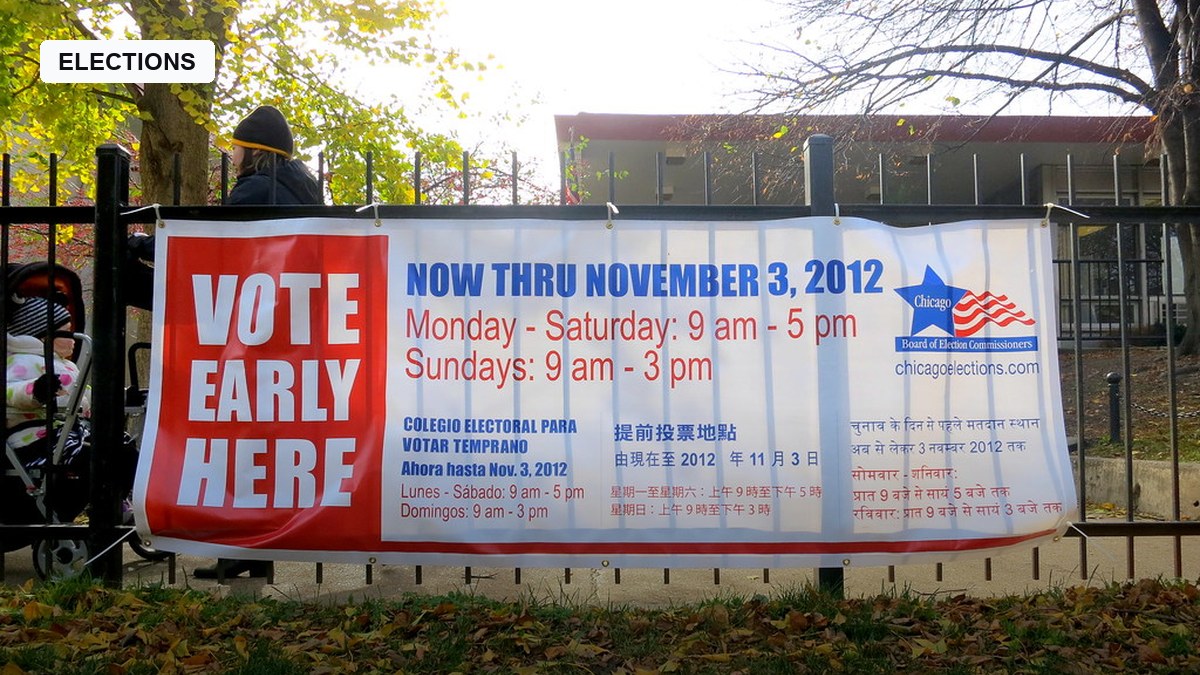
Photo: Kaleb Nyquist / BY via flickr