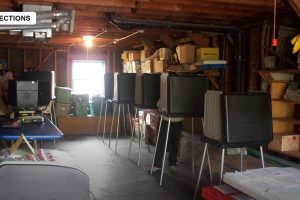
A federal judge in Massachusetts on Tuesday broadened an injunction blocking the U.S. Postal Service from implementing President Donald Trump’s executive order restricting mail-in voting, further dimming prospects that the directive will be in force before the November midterm elections. U.S. District Judge Indira Talwani expanded her earlier order to bar USPS from carrying out Section 3 of the executive order for this year’s elections and beyond, while the case awaits action from the Supreme Court.
What the executive order sought to do
Trump signed the order on March 31, directing the Department of Homeland Security to compile a list of U.S. citizens using federal data and to transmit it to state election officials. Under the order, the Postal Service would deliver absentee or mail-in ballots only to voters confirmed eligible against that list, and the U.S. attorney general would be authorized to investigate and prosecute local election officials who issued ballots to people not on it. Civil rights groups warned the plan could disenfranchise eligible voters flagged in error by imperfect federal databases.
The court’s reasoning
Judge Talwani’s expanded order found that plaintiffs, including voting-rights organizations and several state election officials, were likely to succeed on claims that the executive order oversteps the president’s authority by directing an independent agency, the Postal Service, to enforce eligibility rules that fall under state jurisdiction. The ruling marks the second judicial hold on the mail-voting order this year; an earlier injunction is currently pending before the Supreme Court, which has not yet indicated when it will rule.
Reaction from advocacy groups
The American Civil Liberties Union and the League of Women Voters, which are among the plaintiffs challenging the order, said the ruling protects millions of mail voters from a system that could wrongly reject eligible ballots. Attorneys for the groups argued that DHS citizenship data has a documented error rate that would disproportionately affect naturalized citizens, voters who recently moved, and those with common names. The plaintiffs said the expanded injunction gives state election offices certainty as they finalize procedures for the fall.
The administration’s position
The White House has defended the order as a necessary safeguard against noncitizen voting, arguing courts are obstructing a legitimate exercise of executive authority over federal election integrity. Administration officials have signaled they will continue pressing the Supreme Court to lift the injunctions, framing the litigation as part of a broader push that has also included lawsuits seeking voter-roll data from dozens of states. Justice Department lawyers have argued the Postal Service, as a federal entity, is a proper vehicle for enforcing the citizenship-verification scheme.
Why the timing matters
With the November midterms roughly three months away, election administrators need lead time to print ballots, train poll workers, and finalize mail-voting procedures. The expanded injunction removes uncertainty for now, allowing states to proceed under existing rules rather than an unresolved federal mandate. Election law experts say that even if the Supreme Court eventually takes up the underlying case, a ruling is unlikely to arrive with enough time to implement a new nationwide verification system before ballots go out.
What happens next
The case now moves toward further briefing in the First Circuit while the separate Supreme Court petition remains pending. Election officials in several states said they will proceed with existing mail-ballot procedures for the midterms, watching for any late signal from the high court. Voting-rights groups say they expect the legal fight to continue well past November regardless of the immediate outcome, given the administration’s stated intent to expand citizenship-verification requirements nationwide.
State election officials weigh in
Secretaries of state from both parties have submitted filings in the litigation describing the practical burden a last-minute compliance mandate would impose. Several Republican-led states joined an amicus brief supporting the administration’s position, arguing that federal coordination on citizenship data could help states clean voter rolls more efficiently than piecemeal state-level reviews. Democratic-led states, along with a bipartisan group of county clerks, countered that the order’s timeline left no realistic path to implement new verification systems without risking delays in ballot mailing, particularly in states that rely heavily on mail voting such as Oregon, Washington, and Colorado.
The broader legal landscape
The mail-voting order is one of several election-related executive actions facing court challenges this year, alongside separate Justice Department lawsuits seeking voter-roll data from dozens of states, most of which have also been dismissed or stayed by federal judges. Legal scholars tracking the litigation say the pattern reflects a broader tension between the administration’s election-integrity agenda and courts’ reluctance to grant sweeping federal authority over what has traditionally been state-run election administration. That tension is expected to remain unresolved heading into the fall campaign season.