
Georgia’s race to succeed term-limited Republican Gov. Brian Kemp has settled into a virtual dead heat, according to a new poll of 3,447 registered voters conducted Sept. 15-18, with Republican Rick Jackson at 45% and Democrat Keisha Lance Bottoms at 44%, a gap well within the survey’s margin of error of plus-minus 2.7 percentage points. Nine percent of voters remained undecided and 2% said they would opt out or back another candidate, underscoring how unsettled the race remains just weeks before early voting begins.
Two Very Different Paths to the Nomination
Jackson, a healthcare staffing executive, won the Republican nomination in a June runoff after pouring more than $100 million of his own wealth into the campaign, a spending level that reshaped the primary and allowed him to overwhelm better-known rivals with advertising. Bottoms, the former Atlanta mayor who rose to national prominence during her single term leading the city, is seeking to become Georgia’s first Democratic governor since Roy Barnes left office in 2003, a drought of more than two decades in a state that has elected Republican governors continuously since 2003.
A Coalition Divided by Race, Gender and Age
The poll’s internal breakdown shows a state split along familiar but stark lines. Jackson leads men 50% to 39%, while Bottoms leads women 49% to 42%. Jackson dominates among white voters, 62% to Bottoms’ share, while Bottoms holds a commanding 81% among Black voters. Age divides the electorate just as sharply: Bottoms leads voters age 18-29 at 54% and age 30-44 at 52%, while Jackson leads voters age 45-64 at 50% and voters 65 and older at 56%. Among independents, Bottoms holds an edge, 43% to 37%, with 17% still undecided — a group both campaigns see as decisive.
Jackson’s Self-Funded Campaign Bets on Business Credentials
Jackson has centered his campaign on his background running a healthcare staffing company, arguing that Georgia needs an outsider executive rather than a career politician to manage the state’s growth and address rising housing and insurance costs. His personal wealth has allowed him to run a saturation-level advertising campaign across the state’s media markets, and his allies argue that his outsider profile insulates him from anti-incumbent frustration even though he is running to succeed a fellow Republican.
Bottoms Seeks to Make History Amid a Changing Electorate
Bottoms has framed her campaign around affordability, public education funding and reproductive rights, arguing that her experience managing Atlanta through the COVID-19 pandemic and 2020’s civil unrest prepared her to lead the state through its own period of rapid population growth and economic change. Her campaign has invested heavily in turning out the coalition of Black voters, younger voters and suburban women that powered Democratic wins in Georgia’s 2020 and 2021 federal elections, betting that demographic shifts in metro Atlanta’s suburbs continue to favor Democrats even in a governor’s race that has historically proven tougher terrain than federal contests.
A Debate Looms as the Race Tightens Further
The two candidates are scheduled to meet for a town hall-style debate on Oct. 6, an event both campaigns view as a pivotal opportunity to sway the roughly one in ten voters still undecided. Jackson’s team has signaled he will use the debate to draw sharper contrasts on the economy, while Bottoms’ campaign is expected to press him on details of his business record now that he faces a broader general-election audience beyond the Republican primary electorate that nominated him.
A Broader Pattern of Close Georgia Elections
Georgia’s last four statewide election cycles have each been decided by single-digit margins, a run that includes Ossoff’s 2021 runoff win by fewer than 55,000 votes and Kemp’s own reelection victory in 2022. That history has left both parties wary of reading too much into any single poll, and strategists note that Georgia’s rapidly growing and diversifying suburban counties around Atlanta continue to shift the electorate in ways that make each cycle’s outcome harder to predict based on prior results alone. Both the Jackson and Bottoms campaigns say they are treating the race as if it will again come down to a fraction of a percentage point.
What Comes Next
With early voting set to begin in mid-October, both campaigns are expected to increase spending sharply in the state’s expensive Atlanta media market, and additional polling will be watched closely to see whether either candidate can open a durable lead. Given Georgia’s recent history of razor-thin statewide margins, strategists in both parties expect the governor’s race to remain close through Election Day on Nov. 3, with turnout among independents and suburban voters likely to decide who succeeds Kemp.
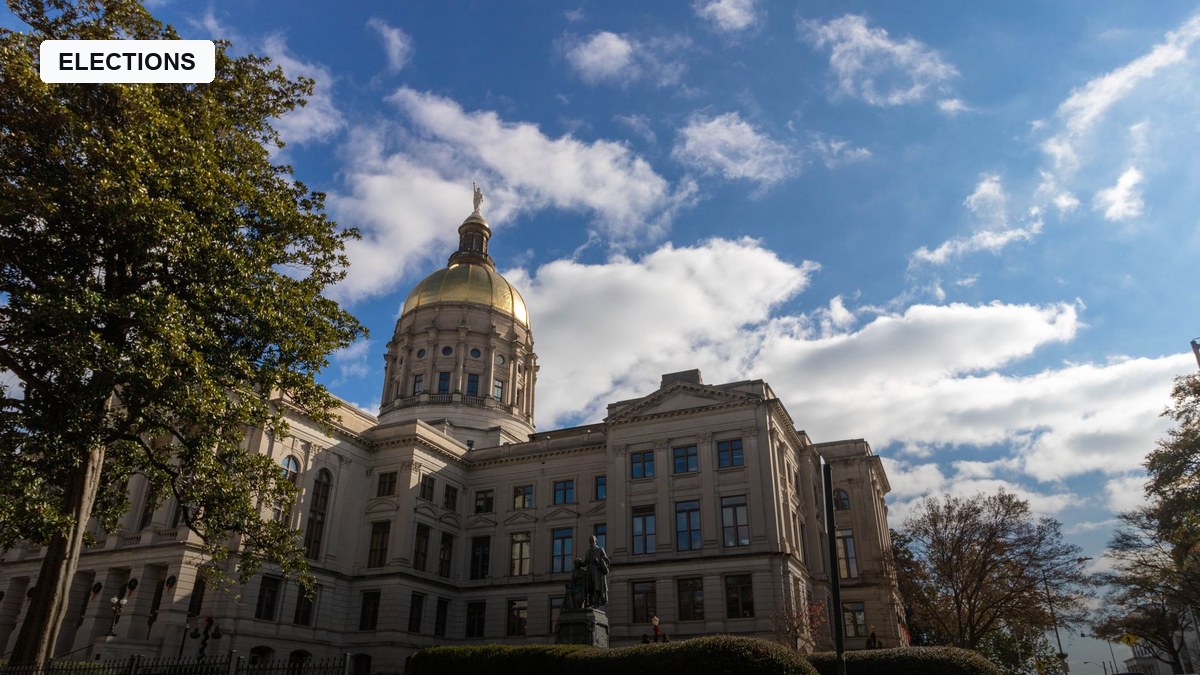
Photo: Katie Brittle / PEXELS via Pexels

