North Carolina Governor Josh Stein allowed House Bill 834 to become law without his signature on August 11, formally enacting it as Session Law 2026-60 after the measure cleared the General Assembly with rare bipartisan support. The bill, titled “SBOE Administrative Changes,” rewrites several of the state’s most contentious ballot-processing procedures just months before the 2026 midterms, giving voters more time to fix problems with their ballots while also handing county boards new counting obligations on Election Night itself.
What the New Law Changes
The centerpiece of HB 834 is an extension of the so-called “cure” window from three business days after an election to five. That extra time applies to voters who need to correct incomplete registration forms, sign missing signatures on provisional ballot affidavits, supply required photo identification for certain provisional ballots, or fix deficiencies on absentee ballots. Election law attorneys say the change could preserve thousands of votes that would otherwise have been rejected on technical grounds, particularly in a state where razor-thin margins have decided statewide races in recent cycles.
New Election Night Counting Rules
The law also requires county boards of elections to convene at 5:00 p.m. on Election Day specifically to begin counting traditional mail-in absentee ballots received by the 7:30 p.m. deadline, with counting continuing until every ballot in the batch is processed. Supporters say this should speed up the release of unofficial results on election night, addressing complaints from 2022 and 2024 when North Carolina’s absentee count lagged neighboring states.
Judicial Review and Voter ID Provisions
HB 834 also changes where legal challenges to State Board of Elections decisions can be filed, allowing plaintiffs to bring judicial review actions either in Wake County, the traditional venue, or in the county where the plaintiff lives. The bill additionally allows voters whose driver’s licenses had expiration dates placed on hold during a prior administrative dispute to continue using those licenses as valid voter ID, resolving a lingering compliance headache for the state’s photo ID law.
How the Bill Evolved
HB 834 had a complicated path. The state Senate initially advanced a broader, more controversial elections package in late July that Democrats criticized as a partisan overreach targeting early voting access and the ballot challenge process, according to reporting by NC Newsline. Senate leaders ultimately split that package into separate bills, stripping out the more contentious early-voting provisions and sending the narrower administrative measure — HB 834 — to the governor on its own track. That split proved decisive: the House had passed HB 834 on a 74-35 vote, with 11 Democrats joining every Republican in support and not a single Republican voting no, and the bill went on to clear the Senate unanimously once the more contested provisions were removed.
Reaction From Both Sides
Voting rights advocates have generally welcomed the extended cure deadlines as a modest but meaningful safeguard, while Republican sponsors emphasized the bill’s focus on operational efficiency and judicial venue flexibility rather than substantive voting-access changes. State Board of Elections officials, who have faced years of legal and political pressure over ballot-counting procedures, said the law provides clearer statutory footing heading into November. Critics on the left, however, note that the companion bills addressing early voting and ballot challenges — which were split off from HB 834 — remain very much alive and could resurface before the midterms.
What It Means for November
With the extended cure period now in state law, county boards across North Carolina will need to update their post-election procedures manuals and voter notification letters before early voting begins this fall. Election administrators say the 5 p.m. counting mandate will require additional staffing on election night, a cost some smaller counties are still budgeting for. The broader fight over early voting hours and ballot challenge procedures — the provisions stripped out of the original House bill — is expected to return as separate legislation in the coming weeks, meaning HB 834 may prove to be only the first chapter in North Carolina’s 2026 election law rewrite.
A Backdrop of Ongoing Election Board Turmoil
HB 834’s relatively smooth, bipartisan passage stands in contrast to a rockier fight playing out over who controls North Carolina’s election boards in the first place. A 2024 law transferred the authority to appoint state and county election board members from the governor’s office to Republican State Auditor Dave Boliek, a shift Governor Stein has publicly criticized as a politicization of what had been a nonpartisan appointment process. NC Newsline has also reported on separate friction after the state board’s online voter search tool went down for much of the state this summer, prompting Democrats and Republicans to trade blame over the outage before the board said Democrats had spread misinformation about its cause. That backdrop of distrust over who runs North Carolina elections — not the substance of HB 834 itself — is what election law observers say will shape how the next round of legislation, covering early voting and ballot challenges, is received when it reaches the governor’s desk.
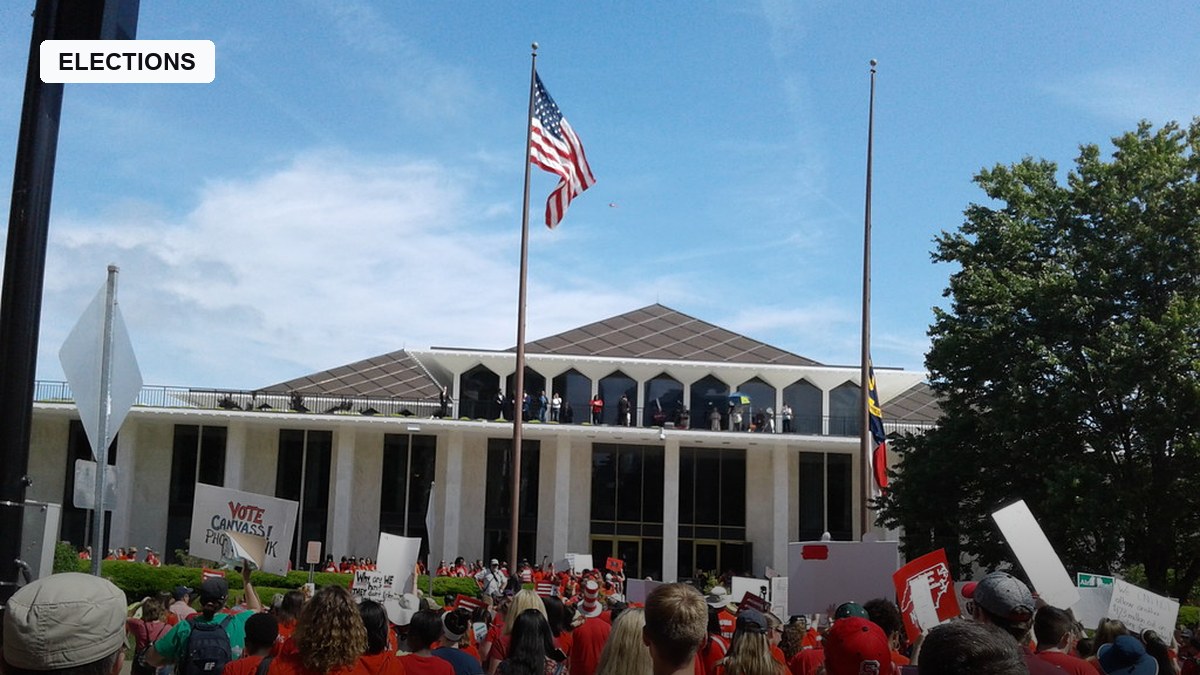
Photo: Gerry Dincher / BY-SA via flickr