Georgia Secretary of State Brad Raffensperger announced on August 12, 2026 the formation of a new bipartisan Election Integrity Task Force, assembling a slate of former elected officials, county election administrators and policy experts to review the state’s voting procedures ahead of the November midterms. The panel arrives as Georgia braces for another high-turnout cycle following the razor-thin statewide contests of 2020 and 2022, and it signals Raffensperger’s continued effort to position the state as a national model for election administration even amid persistent partisan attacks on the process.
A Roster Spanning Both Parties
The task force’s membership list is notable for its bipartisan balance. It includes former Democratic Governor Roy Barnes, former Republican U.S. Senator Saxby Chambliss, former Republican U.S. Representative Drew Ferguson, and former Atlanta Mayor Shirley Franklin, a Democrat. Rounding out the group are county election directors, retired judges and academics who study election law, according to the Secretary of State’s office. Raffensperger’s team described the coalition as an ‘ongoing forum’ rather than a one-time commission, with members expected to meet regularly through Election Day and beyond.
What the Task Force Will Examine
According to the announcement posted to the Secretary of State’s website, the group’s mandate covers five areas: voter list maintenance, election administration best practices, transparency initiatives, combating election misinformation, and monitoring county-level compliance and performance. Raffensperger’s office said the task force will operate under an ‘open-door policy,’ giving state officials direct, continuous feedback from local election workers and community leaders rather than relying solely on post-election reviews.
Georgia’s Recent Election History Looms Large
Georgia has been at the center of national election-integrity debates since the 2020 presidential race, when Raffensperger, a Republican, publicly rejected pressure to overturn President Trump’s narrow loss in the state, a decision that made him both a target of criticism from within his own party and a symbol of institutional resilience for Democrats. Since then, the state legislature has passed multiple rounds of election-law changes, including SB 202 in 2021, that tightened absentee-ballot rules while also expanding some early-voting days. Raffensperger has repeatedly said Georgia elections use paper-ballot systems with verifiable audit trails, a point his office continues to emphasize publicly as confidence in election administration remains a nationwide flashpoint.
Two Views on the Task Force’s Purpose
Supporters, including several task force members quoted in local reporting, argue that a standing bipartisan body can catch administrative problems, such as inconsistent poll-worker training or voter-roll errors, before they become flashpoints in a contested election. Former Mayor Franklin said the initiative reflects a shared interest across party lines in making sure ‘every legal vote counts and every voter can trust the count.’ Critics, however, including some voting-rights advocates, caution that a task force with an advisory-only role cannot address deeper concerns they have raised about purges of inactive voters from Georgia’s rolls or long lines at polling places in metro Atlanta during past elections. They argue that without enforcement authority or dedicated funding, the panel risks being a public-relations exercise rather than a substantive check on administration.
Chambliss and Ferguson on Restoring Trust
Chambliss, who represented Georgia in the Senate for two terms, said in a statement distributed by the Secretary of State’s office that restoring public trust in elections requires visible, credible voices from both parties working together rather than dueling press conferences after results are in dispute. Ferguson, who left Congress in 2025, echoed that sentiment, noting that county election directors — who are often overwhelmed during high-turnout cycles — need a direct channel to state officials to flag problems in real time rather than after litigation begins.
What Comes Next
The task force is expected to hold its first formal meetings in the coming weeks, with members reviewing county-level security protocols and identifying administrative gaps before early voting begins for the November midterms. Georgia’s midterm ballot will include a closely watched U.S. Senate race and several competitive U.S. House contests, along with statewide constitutional offices, ensuring that turnout and administration will draw intense national scrutiny. Raffensperger’s office said it plans to issue periodic public updates on the task force’s findings, though it has not committed to a timeline for a final report. Whether the panel can bridge the gap between its bipartisan makeup and the deeper structural disputes over voter-roll maintenance and polling access will likely determine if it becomes a durable institution or a temporary response to election-season pressure.
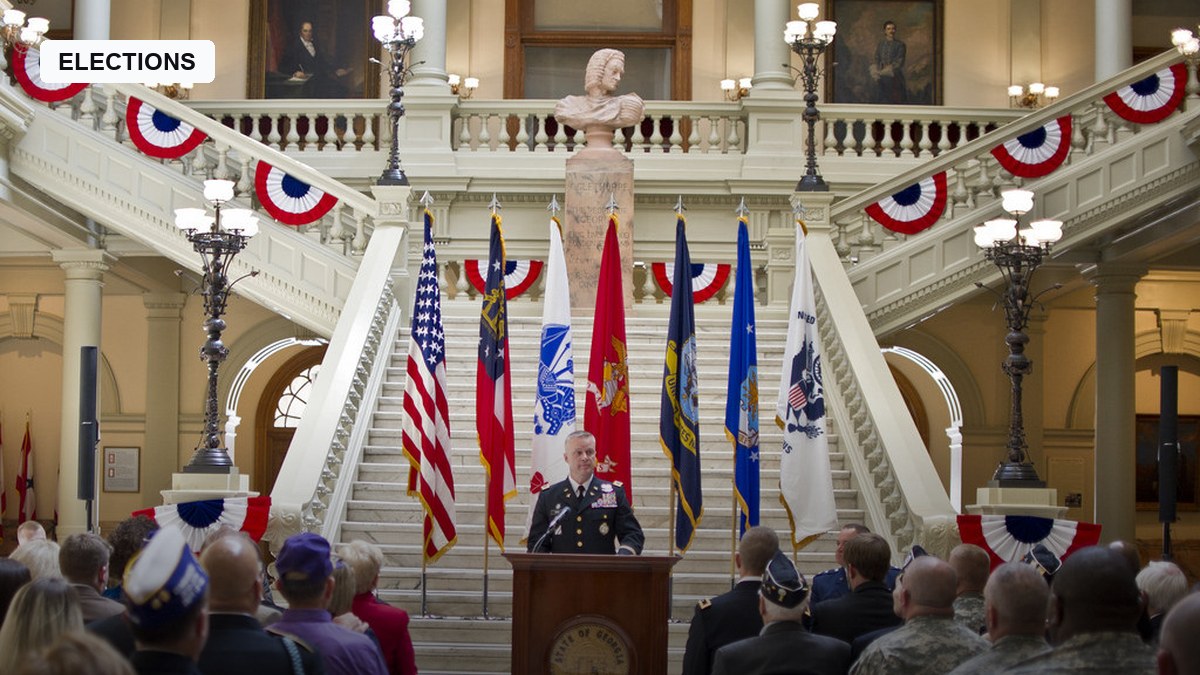
Photo: Georgia National Guard / BY via flickr