
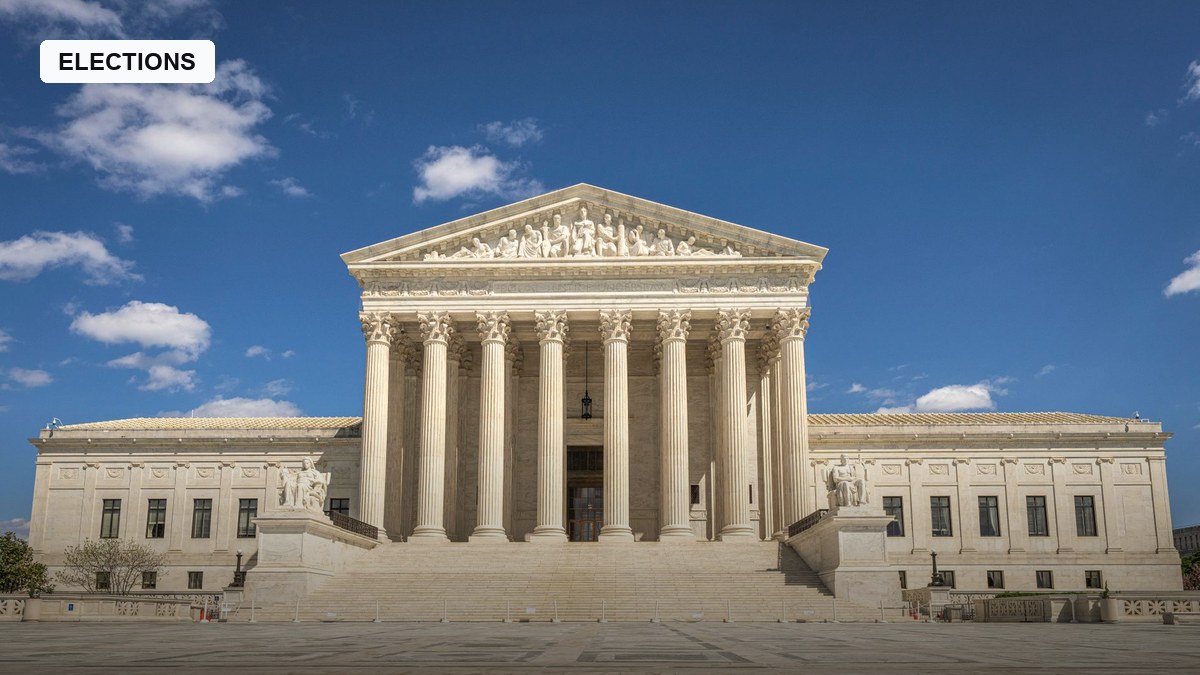
The Supreme Court ruled 6-3 on June 30 in National Republican Senatorial Committee v. FEC that federal limits on how much political parties may spend in coordination with their own candidates violate the First Amendment, overturning a 25-year-old precedent and clearing the way for parties to direct significantly more money in direct partnership with campaigns ahead of the 2026 midterms.
The Case’s Origins
The lawsuit was filed in 2022 in the U.S. District Court for the Southern District of Ohio by the National Republican Senatorial Committee, the National Republican Congressional Committee, then-Senate candidate JD Vance, and then-Rep. Steve Chabot. The plaintiffs challenged provisions of the Federal Election Campaign Act that cap how much national and state party committees can spend in coordination with their own candidates — limits distinct from the unlimited independent spending allowed for outside groups like super PACs. In an unusual turn, the federal government itself declined to defend the law, arguing the limits were unconstitutional, prompting the Democratic National Committee to intervene to defend the restrictions in court. The full Sixth Circuit Court of Appeals ultimately ruled for the FEC, holding itself bound by the Supreme Court’s 2001 decision in FEC v. Colorado Republican Federal Campaign Committee, known as Colorado II, even though several appellate judges wrote separately to express doubts about that precedent’s continued soundness.
What the Court Decided
Writing for the majority, Justice Brett Kavanaugh — joined by Chief Justice John Roberts and Justices Clarence Thomas, Samuel Alito, Neil Gorsuch, and Amy Coney Barrett — held that the coordinated party expenditure limits were not narrowly tailored to the government’s anti-corruption interest, given that other tools already exist to prevent circumvention of individual contribution limits. The majority’s opinion rested substantially on a “parity” rationale: if outside groups can spend unlimited sums independently to support a candidate, the reasoning goes, a political party should not face a lower ceiling when spending in direct coordination with that same candidate. The ruling explicitly overruled Colorado II, which had upheld the coordinated-spending limits as a safeguard against parties being used to funnel excessive contributions to candidates.
Kagan’s Dissent
Justice Elena Kagan dissented, joined by Justices Sonia Sotomayor and Ketanji Brown Jackson. Kagan warned that eliminating coordinated spending limits risks collapsing the legal distinction between parties and candidates altogether, cautioning that a party committee could effectively become a candidate’s “checking account” for wealthy donors who have already maxed out their direct contributions. The dissent argued that the majority’s parity logic ignores a key difference between independent and coordinated spending: coordination allows a donor’s money to be directed precisely as a candidate wishes, which is the exact dynamic contribution limits were designed to prevent.
Reaction From Both Sides
Republican officials and campaign finance deregulation advocates praised the decision as restoring parties to a central role in supporting their own candidates, arguing that the prior limits had perversely pushed money toward less accountable outside groups instead. Campaign finance reform organizations and many Democrats criticized the ruling as another step toward dismantling post-Watergate-era contribution safeguards, warning it could allow a small number of megadonors to exert outsized influence over competitive races by funneling large coordinated sums through party committees. Both sides agree the decision marks a significant structural change in how campaigns can legally be financed, even as they disagree sharply on whether that change serves the public interest.
Practical Effect Ahead of the Midterms
In practice, the ruling removes a formula-based cap — previously tied in part to a state’s voting-age population — that governed how much party committees could spend coordinating directly with Senate and House candidates on advertising, polling, and other campaign activities. Because the change applies equally to both parties, analysts expect whichever party maintains the larger and more efficient joint fundraising and party-committee infrastructure heading into November to gain the greatest practical advantage from the new freedom to coordinate.
What’s Next
With the ruling already in effect for the 2026 midterm cycle, both the NRSC and the Democratic Senatorial Campaign Committee, along with their House counterparts, are expected to rapidly expand coordinated spending arrangements with candidates in competitive races. Campaign finance watchdogs say they will be watching closely for signs that coordinated spending becomes a vehicle for circumventing remaining contribution limits, and some have called for Congress to consider new transparency requirements, though prospects for legislative action remain uncertain given a closely divided Congress. Legal observers also expect the decision to be cited in future challenges to other remaining campaign finance restrictions.
Photo: Mark Stebnicki / PEXELS via Pexels

