A single Supreme Court decision is rippling toward one of the largest mid-cycle shifts in U.S. House history. The Court’s ruling in Louisiana v. Callais, which gutted a core protection of the Voting Rights Act, has opened the door for Republican-led states to redraw maps in ways that could net the party as many as 19 additional House seats.
What the Court did
In a 6-3 decision on April 29, the Court all but ended the Voting Rights Act’s guarantee that communities of color have the right to fair congressional districts — the ability to elect candidates of their choice. Critics say it clears the way for vote dilution; the Court was so intent on its application that it granted a request to immediately finalize the opinion, letting Louisiana redraw its map in time for 2026.
The 19-seat math
The downstream numbers are staggering. Democrats fear the ruling could help Republicans pick up as many as 19 GOP-leaning House seats — a swing large enough to decide control of the chamber on its own. In a House where majorities have been razor-thin, redrawing a dozen-plus districts mid-decade is less a tweak than an earthquake.
The states racing to redraw
The effect concentrates in the South. The ruling could reshape maps in Arkansas, Louisiana, Missouri, Mississippi and South Carolina, where minority-opportunity districts are now vulnerable. Within an hour of the decision, the Republican-controlled Florida House approved an aggressively gerrymandered map projected to net the party four more seats — a preview of the cascade to come.
The political response
The reaction was fierce. Senate Democratic Leader Chuck Schumer said the ruling ‘upends half a century of precedent’ and ‘defies the spirit of the American Civil Rights Movement.’ Voting-rights groups warn it removes the main legal tool for challenging discriminatory maps, leaving affected communities with few avenues for recourse before November.
Why it matters
This is the rare court decision that could swing national power directly. By weakening the VRA and enabling mid-decade redraws, the ruling lets map-drawing — not just voting — shape who controls Congress. The consequences extend beyond 2026: it normalizes redrawing lines whenever a party can, and reshapes representation for communities the VRA was designed to protect.
The bottom line
The Callais ruling has set off a redistricting scramble that could hand Republicans up to 19 House seats and tilt control of the chamber before a single 2026 ballot is cast. It is one of the most consequential election-law decisions in decades — and its full impact will be measured in the maps now being hurriedly redrawn across the South.
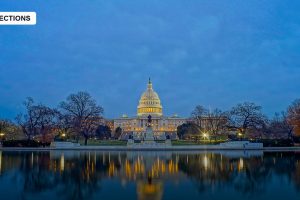
Photo: Onasill – Bill Badzo – OFF- VACATION / BY-SA via flickr