Michigan’s race for governor narrowed dramatically on August 4, 2026, as U.S. Rep. John James won a competitive Republican primary buoyed by President Trump’s endorsement, while Secretary of State Jocelyn Benson easily secured the Democratic nomination to succeed term-limited Gov. Gretchen Whitmer. The result winnows what had been one of the most crowded gubernatorial fields in Michigan history down to a two-candidate general election contest.
A Field That Started With 17 Candidates
The race began with 17 candidates spread across three parties: an independent bid from former Detroit Mayor Mike Duggan, five Democrats including Benson, Genesee County Sheriff Chris Swanson, Marni Sawicki, Kim Thomas, and Kevin Hogan, and ten Republicans led by James, businessman Perry Johnson, Mike Cox, Tom Leonard, Aric Nesbitt, Ralph Rebandt, Karla Wagner, Anthony Hudson, Joyce Gipson, and Evan Space. The sheer size of the field reflected both parties’ recognition that an open governor’s seat in a top-tier swing state would draw national attention and resources.
Trump’s Late Endorsement Reshaped the GOP Race
On June 22, 2026, President Trump issued what he called his “Complete and Total Endorsement” of James on Truth Social, citing James’s military service as an Army combat veteran and his business background while praising his support for the administration’s agenda. The endorsement came as Johnson, a wealthy businessman largely self-funding his campaign, continued to compete aggressively for the same conservative base, forcing James to spend heavily in the campaign’s final weeks despite the presidential backing.
Benson’s Comfortable Path to the Nomination
Benson, a two-term secretary of state who oversaw Michigan’s elections through the contentious 2020 and 2024 cycles, defeated Genesee County Sheriff Chris Swanson and the rest of the Democratic field with relative ease, having been considered the frontrunner for much of the race. Her national profile, built in part on her public clashes with election deniers challenging Michigan’s vote counts, gave her a fundraising and name-recognition advantage that the rest of the Democratic field struggled to overcome.
Duggan’s Independent Wildcard
Former Detroit Mayor Mike Duggan’s decision to run as an independent adds an unpredictable element to the general election, since he did not appear on either party’s primary ballot and instead qualified directly for the November contest. Duggan, a popular figure in Detroit who oversaw the city’s post-bankruptcy recovery, could siphon votes from either major-party nominee, particularly in the Detroit metro area where his profile remains strong among both Democratic and independent-leaning voters.
What the Candidates Are Campaigning On
James has centered his general-election pitch on public safety, economic growth tied to Michigan’s auto and defense manufacturing sectors, and closer alignment with the Trump administration’s energy and trade policies. Benson has emphasized her record defending Michigan’s elections from interference, along with pledges to expand affordable housing and child care, framing herself as a steady hand against what she describes as extremism in the Republican field.
Why Michigan Matters Nationally
Michigan’s governor’s race is one of the most closely watched of the 2026 cycle because of the state’s perennial status as a presidential swing state and its history of razor-thin statewide margins. National Republican and Democratic committees are expected to direct significant financial resources into the race, viewing a win in Lansing as a signal of momentum heading into the 2028 presidential contest. Both parties also see the race as a proxy fight over Trump’s influence within the GOP, given how directly his endorsement shaped the Republican primary outcome. With Duggan’s independent candidacy adding uncertainty and a competitive, well-funded matchup between James and Benson now set, Michigan is positioned to be one of the most expensive and closely contested governor’s races in the country this November, one that could offer an early read on how swing-state voters are processing the Trump administration’s second-term record.
Fundraising and the Air War Ahead
Both campaigns are expected to report substantial fundraising totals in the weeks after the primary, with James’s team leaning on national Republican donor networks energized by the Trump endorsement and Benson drawing on a base of small donors built during her tenure fighting election-security battles. Political advertising trackers anticipate Michigan’s airwaves will be saturated with gubernatorial spots well before Labor Day, as both parties treat the race as a bellwether contest heading into the 2028 presidential cycle. Party strategists on both sides say the state’s history of tight statewide margins, often decided by a percentage point or less, means neither campaign can afford to cede any region of the state, from the western Michigan suburbs to the Upper Peninsula, without a fight.
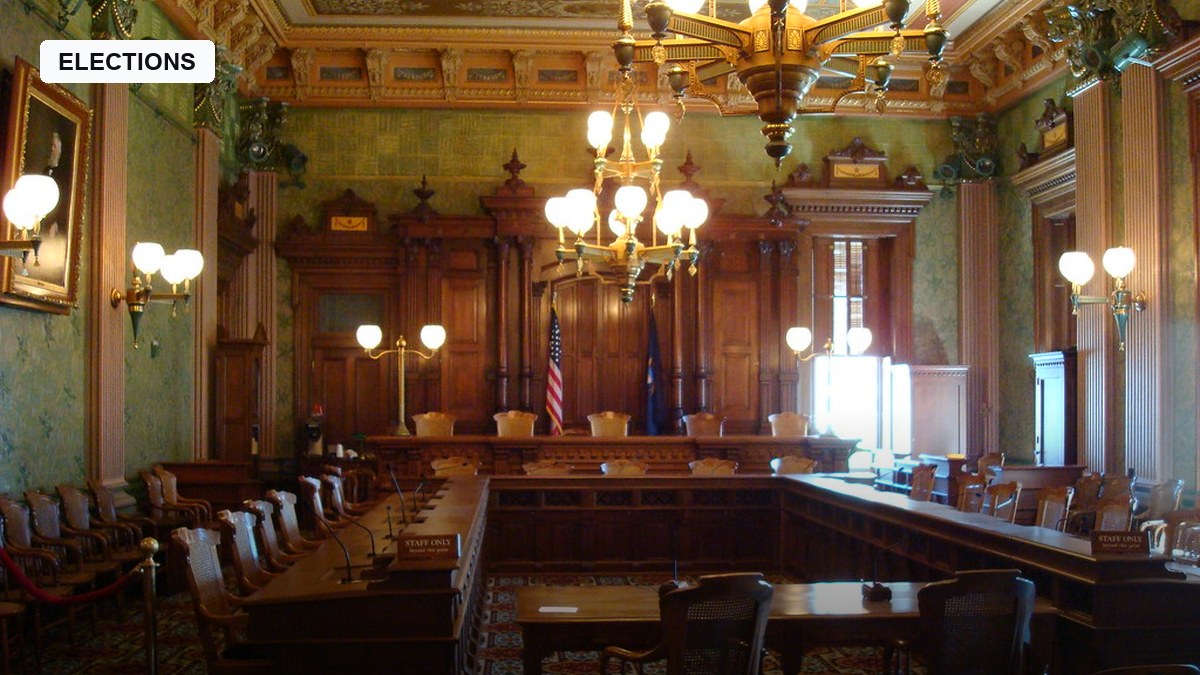
Photo: MittenStatePhototog / BY via flickr