
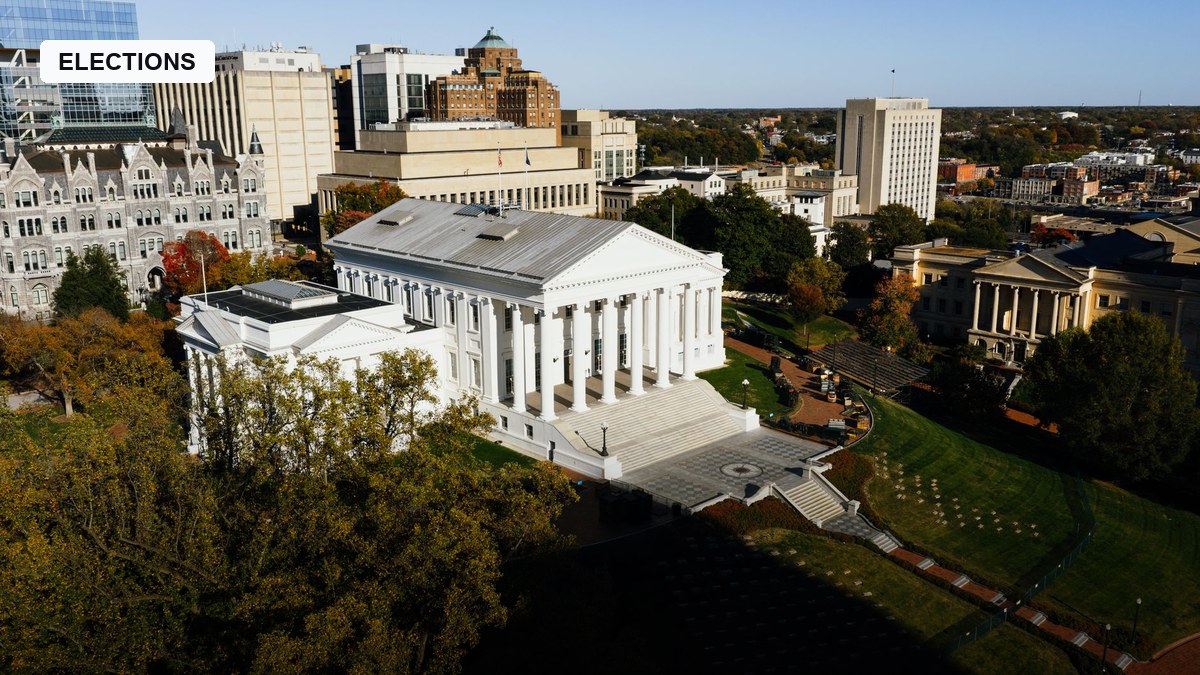
A 4-3 ruling from the Virginia Supreme Court has erased Democrats’ plan to redraw the state’s congressional map ahead of November, restoring the current court-imposed district lines and dealing the party a setback in its push to flip the U.S. House. The May 8, 2026 decision, and the U.S. Supreme Court’s subsequent refusal to revive the map, closes out one of the most consequential redistricting fights of the 2026 cycle, though its political aftershocks are still being felt heading into Election Day.
A Ballot Measure Undone
Virginia voters had narrowly approved a constitutional amendment in an April 21, 2026 special election authorizing the Democratic-controlled Legislature to redraw the state’s eleven U.S. House districts. The resulting map, dubbed the 10-1 plan by critics because it would have given Democrats a realistic path to all but one seat, was designed to counter aggressive Republican gerrymanders enacted in other states earlier in the redistricting cycle. Virginia’s current delegation, drawn by a court after a bipartisan redistricting commission deadlocked following the 2020 census, splits six Democratic seats to five Republican.
The Procedural Flaw That Doomed the Map
The state Supreme Court did not rule on whether the new map’s district shapes were fair. Instead, the majority found the Legislature violated the constitution’s own amendment process by approving the measure in a manner that skipped the required two-session, intervening-election sequence, then placing it before voters after early voting had already started elsewhere. Writing for the majority, Justice D. Arthur Kelsey said lawmakers had submitted the amendment in an unprecedented manner, stating that the violation irreparably undermines the integrity of the resulting referendum vote and renders it null and void.
A Sharp Dissent and Swift Reactions
Chief Justice Cleo Powell dissented, warning that the majority’s reasoning creates an infinite voting loop that appears to have no established beginning, a formulation she argued courts could use to invalidate future amendments indefinitely. Reaction split along familiar lines. President Trump called the ruling a huge win for the Republican Party, and America, in Virginia. NRCC Chairman Richard Hudson said Republicans were on offense and going to win. Virginia House Speaker Don Scott, a Democrat, said his caucus respected the court’s opinion but that voters had wanted to fight back against what he called a Trump power grab in redistricting nationally. DCCC Chair Suzan DelBene said voters would have the final say in November regardless.
A Longshot Appeal to Washington
Virginia Democrats sought an emergency stay from the U.S. Supreme Court to reinstate the new map before ballots were printed. The justices declined, tossing the emergency application in a one-sentence order that offered no reasoning and noted no dissents. Legal observers had described the appeal as a longshot from the outset, since the state court’s ruling rested on an interpretation of Virginia’s own constitutional amendment process rather than a federal question the U.S. Supreme Court would typically review. The episode also showed how quickly mid-decade redistricting fights have moved through the courts this cycle, with state supreme courts in several states issuing rulings within weeks of new maps being adopted, rather than the years such disputes traditionally took.
Part of a Larger National Mapping War
Virginia’s fight did not happen in isolation. It followed a wave of mid-decade redistricting efforts launched after allies of President Trump urged Republican-led states to redraw maps mid-cycle to protect the House majority, prompting Democratic-led states to respond in kind. Texas, Missouri, and North Carolina moved first with new Republican-favored maps, and Virginia’s 10-1 proposal was explicitly framed by its Democratic sponsors as a countermeasure. With Virginia’s map now voided, Democrats have fewer offsetting gains elsewhere to balance Republican-drawn maps that survived legal challenges in other states this year.
What It Means for Control of the House
With the emergency appeal exhausted, Virginia’s 2026 midterm elections are proceeding under the existing court-drawn map rather than the more Democratic-friendly lines voters had approved, preserving the current 6-5 Democratic edge in the delegation rather than expanding it. For a House that Republicans control by a narrow margin, the ruling removes several additional competitive seats Democrats had been counting toward a national path to a majority. It also adds Virginia to a growing list of states, including Missouri, Utah, and Wisconsin, where courts rather than voters or legislators have had the final word on district lines this cycle. For Virginia Democrats, led by Gov. Abigail Spanberger, the defeat narrows one avenue for gains but does not foreclose others; for Republicans, it locks in a map they view as fairer heading into a midterm environment that national polling suggests remains competitive. Both parties now turn to the ballot box itself, where the fight over Virginia’s congressional delegation will be settled under maps that have already outlasted a year of litigation.
Photo: K / PEXELS via Pexels

