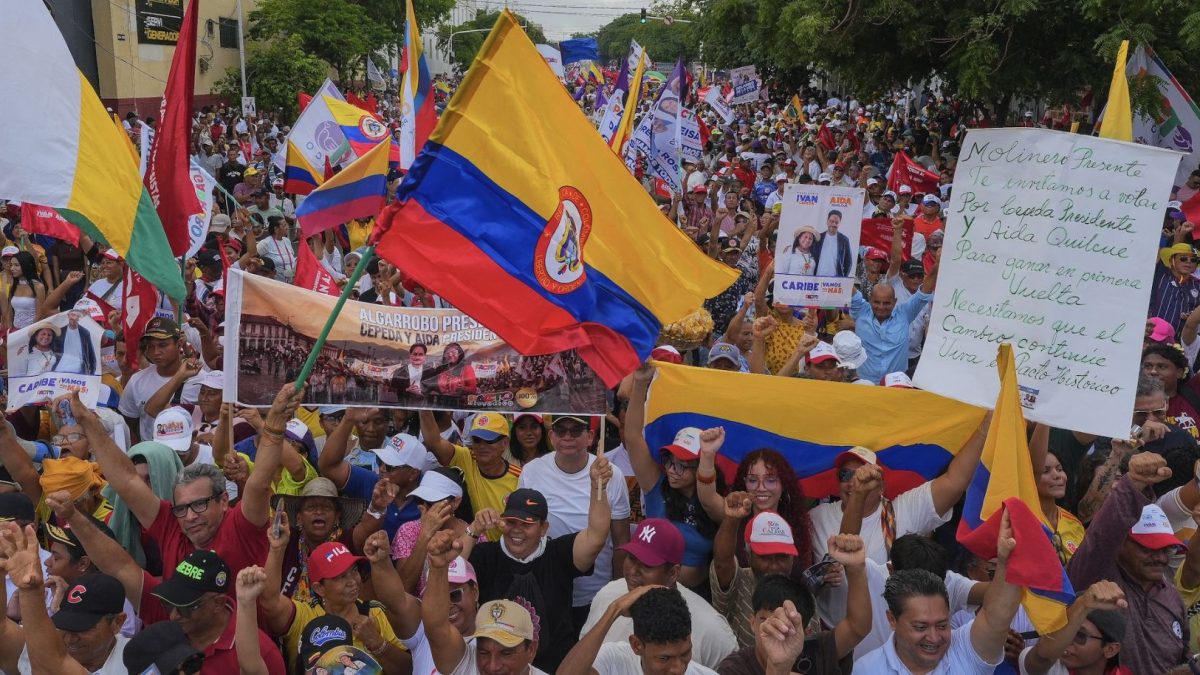
Colombia’s presidential election is heading into a high-stakes runoff after a first-round result that sharpened the country’s ideological divide.
Right-wing lawyer Abelardo de la Espriella led the first round, while leftist Iván Cepeda, an ally of outgoing President Gustavo Petro, advanced with him to the second round. No candidate won an outright majority, forcing a runoff later in June.
The result surprised parts of the political establishment because de la Espriella outperformed expectations. AS/COA’s election tracker reported him at 43.7% in the first round, with Cepeda at 40.9%, setting up a June 21 runoff between two candidates with sharply different visions for Colombia.
The race now turns on three questions: security, continuity, and trust. De la Espriella has built his appeal around a hardline message on crime and order. Cepeda represents a left-wing coalition more closely associated with Petro’s political project. That contrast gives voters a clear ideological choice, but it also raises the stakes for a country still dealing with security concerns, inequality, and public frustration with institutions.
The runoff campaign is likely to focus on undecided voters and those who supported candidates eliminated in the first round. With the first-round margin narrow, turnout and coalition-building could decide the race.
The political risk is that both campaigns frame the runoff as an existential choice. That can energize supporters, but it can also deepen mistrust if either side questions the process.
Colombia’s election is now entering its most delicate phase. The first round showed voter anger and polarization. The runoff will show whether the country can turn that tension into a clear democratic mandate.