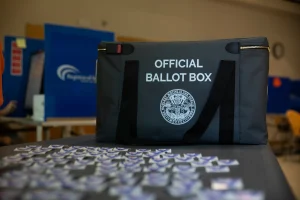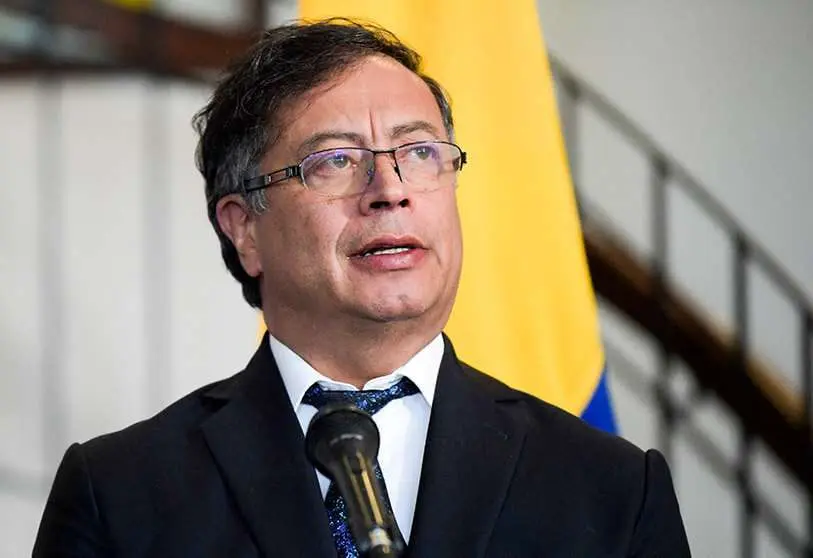
Colombia’s presidential runoff is approaching under a cloud of fraud allegations, but international observers say the evidence does not support the claims.
The European Union’s Electoral Observation Mission rejected President Gustavo Petro’s allegations of fraud in the first round, saying the vote was conducted transparently and without irregularities. The mission said none of the 12 candidates had reported fraud concerns, and Colombia’s National Registry reported only a 0.06% discrepancy between quick-count and official results.
That finding is politically significant.
Petro’s allegations arrived during a tense election cycle, with right-wing candidate Abelardo de la Espriella leading the first round and leftist candidate Iván Cepeda advancing to the June 21 runoff. In a polarized race, fraud claims can shape voter behavior even when they are not substantiated.
The danger is not only legal. It is psychological.
When a sitting president questions an election process, supporters may begin to distrust the result before the runoff even takes place. That can pressure election officials, intensify street politics, and make it harder for the losing side to accept the final outcome.
Observers play an important role in that environment. Their job is not to decide who should win. It is to assess whether the process was transparent, whether votes were counted properly, and whether parties had access to mechanisms for complaints.
In Colombia’s case, the EU mission’s conclusion undercuts the fraud narrative.
That does not mean every voter concern disappears. Elections in polarized countries often produce disputes about registration, counting speed, media coverage, and campaign fairness. But a credible investigation requires evidence. Broad claims of fraud, without proof, can become a political strategy rather than an accountability tool.
The runoff now becomes a test of institutional trust.
Both campaigns will try to mobilize supporters who believe the country’s future is at stake. That is normal democratic competition. But if fraud claims become central to the campaign, the loser may face pressure not to concede.
That is where Colombia’s institutions matter most.
Election officials, observers, courts, parties, and civil society groups will need to keep the focus on evidence. The public should see complaints investigated, but it should also see unsupported claims challenged quickly.
Colombia’s first round produced a close and tense result.
The runoff will decide the presidency.
But the investigation into fraud claims has already decided one important point: suspicion alone is not proof.